 01
12K
12K RGBW sensor
A large format 35.64×23.32mm sensor in a compact, versatile body.
Cinematographer and director, known for his work with brands including Aston Martin, SCUF Gaming and Lotus Cars. Nine months with one camera, the Blackmagic PYXIS 12K, from −32°C to the Sahara above 40°C. This is his story, in his own words.
“I wanted to get a few different looks out of the project. Some sumptuous and really expansive, but also a dash of fast paced excitement.”
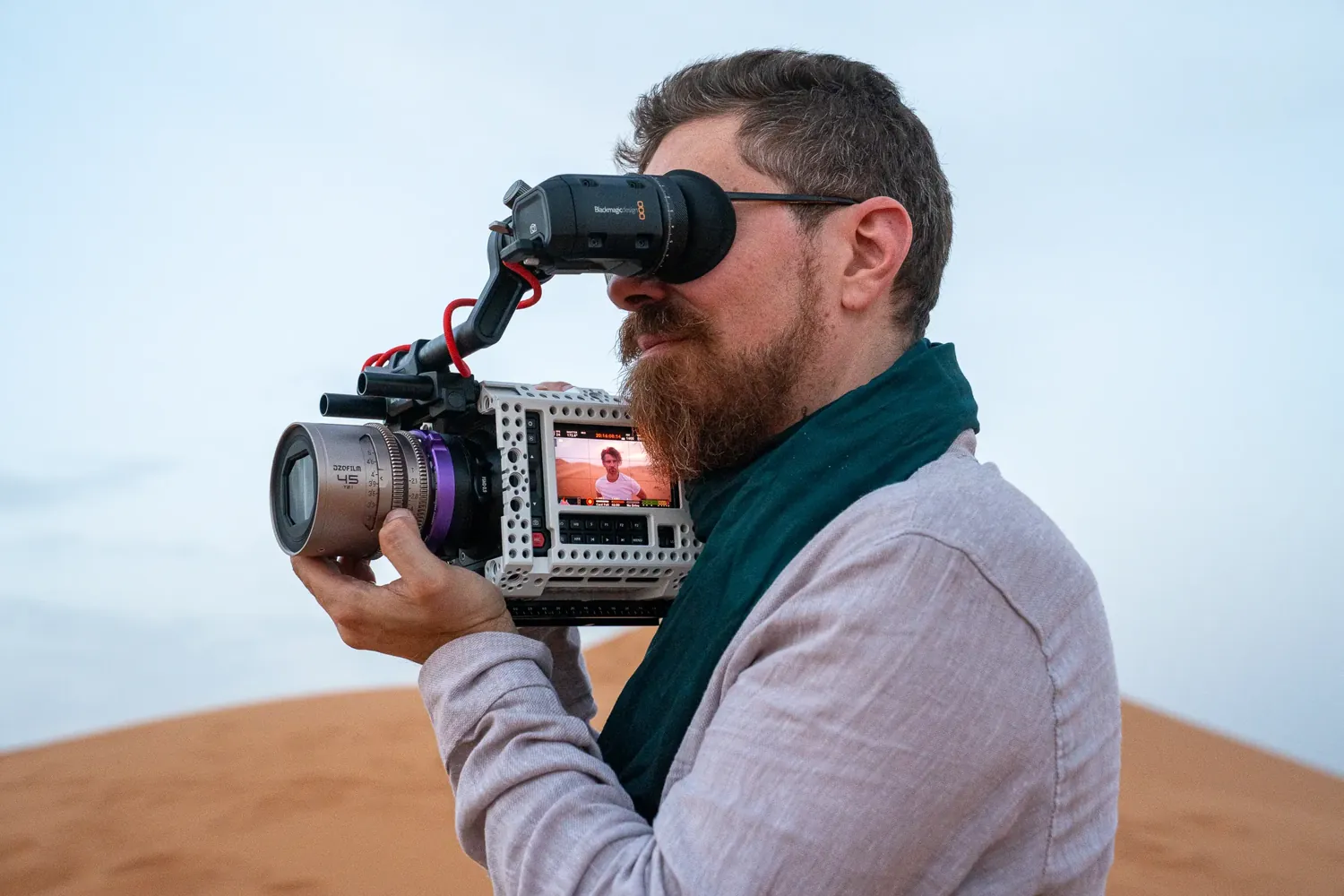
Dale is known for his work with brands including Aston Martin, SCUF Gaming and Lotus Cars. When he got the PYXIS 12K he set out to find its limits: three cold-weather projects in Iceland and Norway, entirely unsupported, with the camera rigged to a modified Jeep, ATVs, buggies and a Suzuki Swift drifting across frozen lakes. He spent nine months with the PYXIS 12K on a run of very different jobs, then took it to Morocco to try the shots he had been planning for a while: a huge sun behind a figure in the Sahara, vehicles at speed, and Marrakech at night.
01A large format 35.64×23.32mm sensor in a compact, versatile body.
 02
Sixteen stops of dynamic range, for the highlight and the shadow in the same frame.
 03
Almost the whole of a full frame, in a body built to travel.
 04
EF, PL or L-Mount, so the lenses you already trust can come with you.
 05
Blackmagic RAW to CFexpress, with proxies. DaVinci Resolve Studio is included.
Some sumptuous and really expansive, but also a dash of fast paced excitement.
Dale CampbellDale wanted a few different looks out of one trip: wide, slow and golden, and quick and loud. For the desert scenes he borrowed clothing from a fashion brand, so the films could work as a spec ad.
It was also a travel shoot, so there were compromises. As he puts it, no shoot is perfect and no camera is perfect: you make creative decisions based on what you have in the bag, where you are and the conditions in front of you.
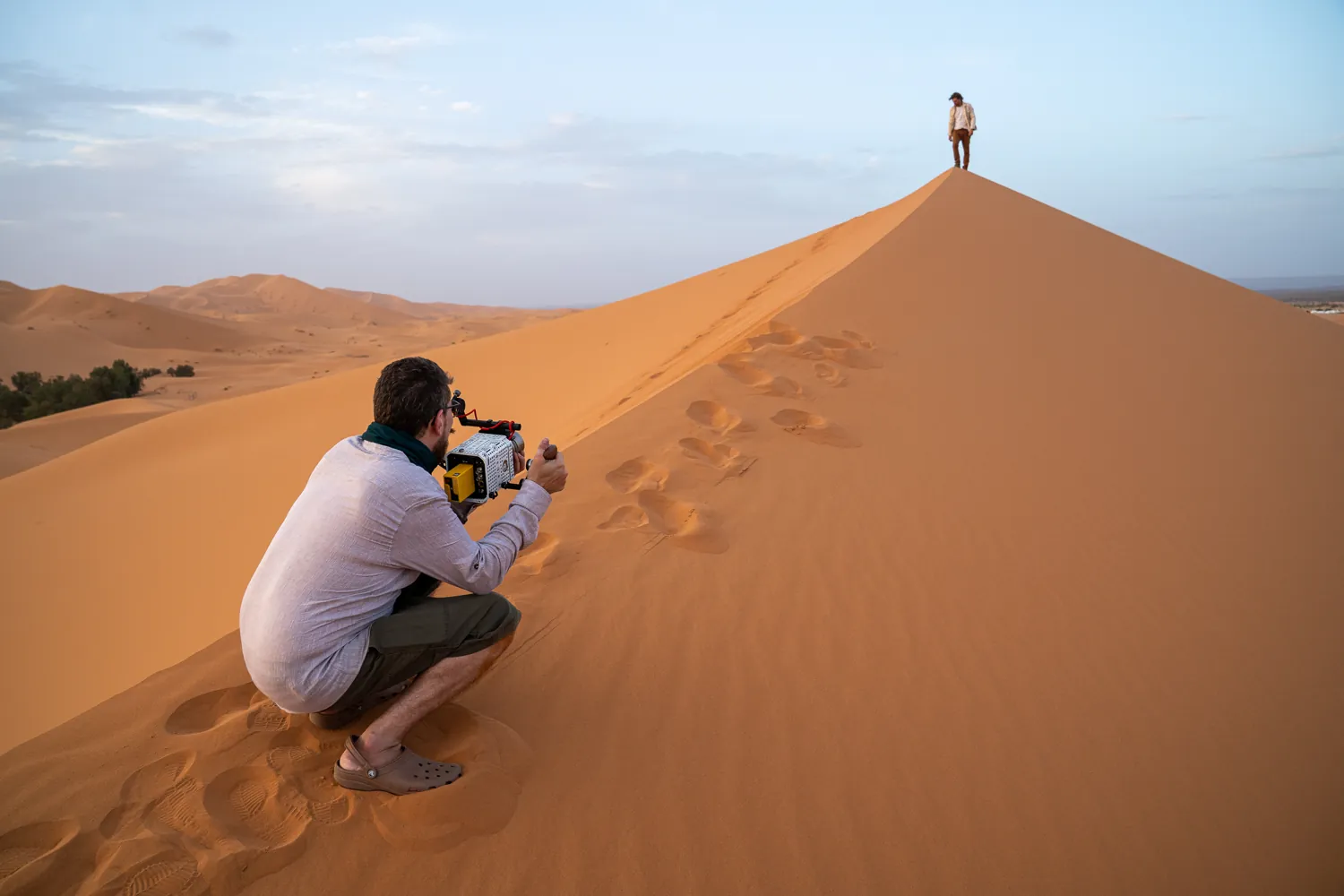
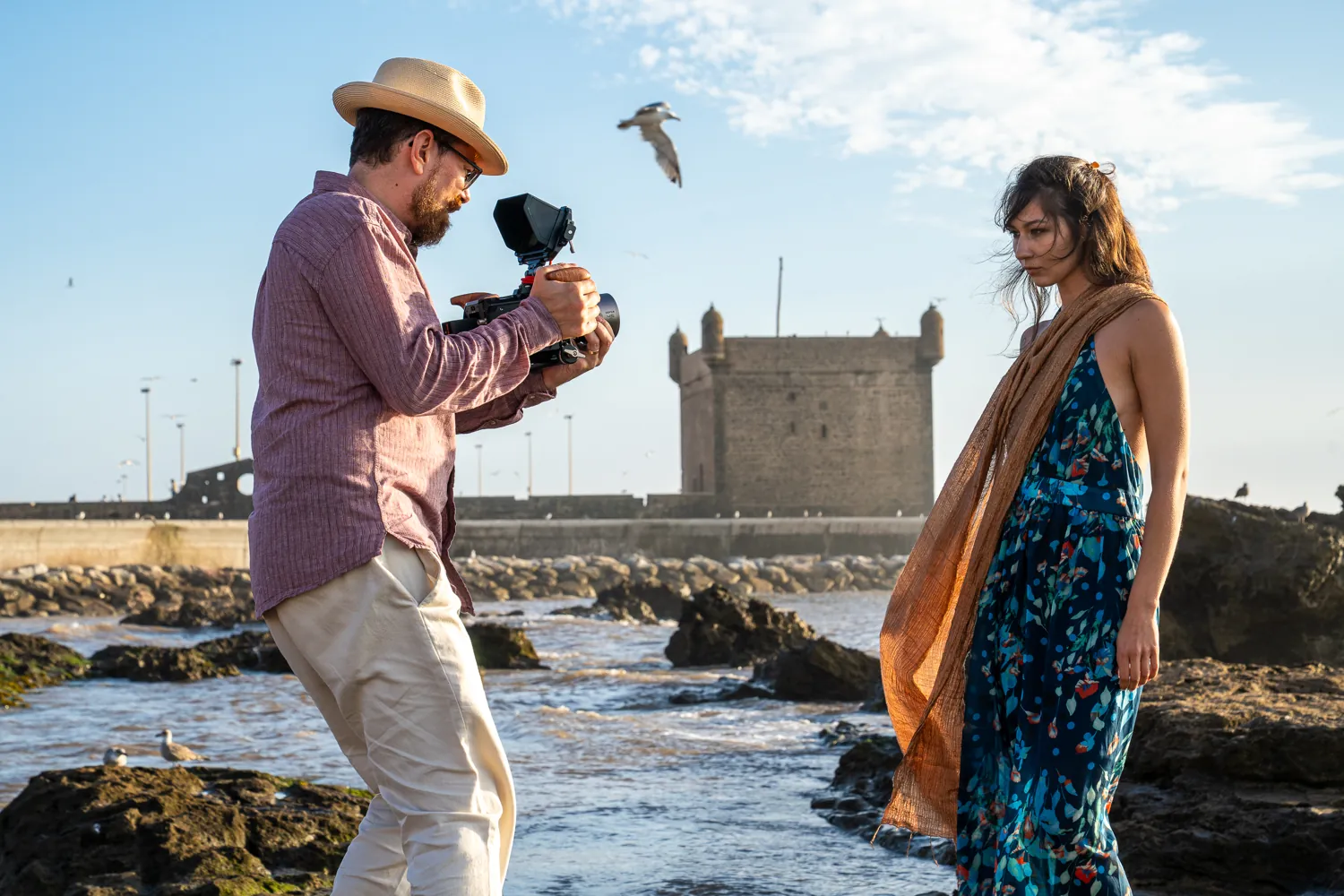
Dale borrowed clothing from a fashion brand he knows, so the films could work as a spec ad. It gave the shoot a focus.
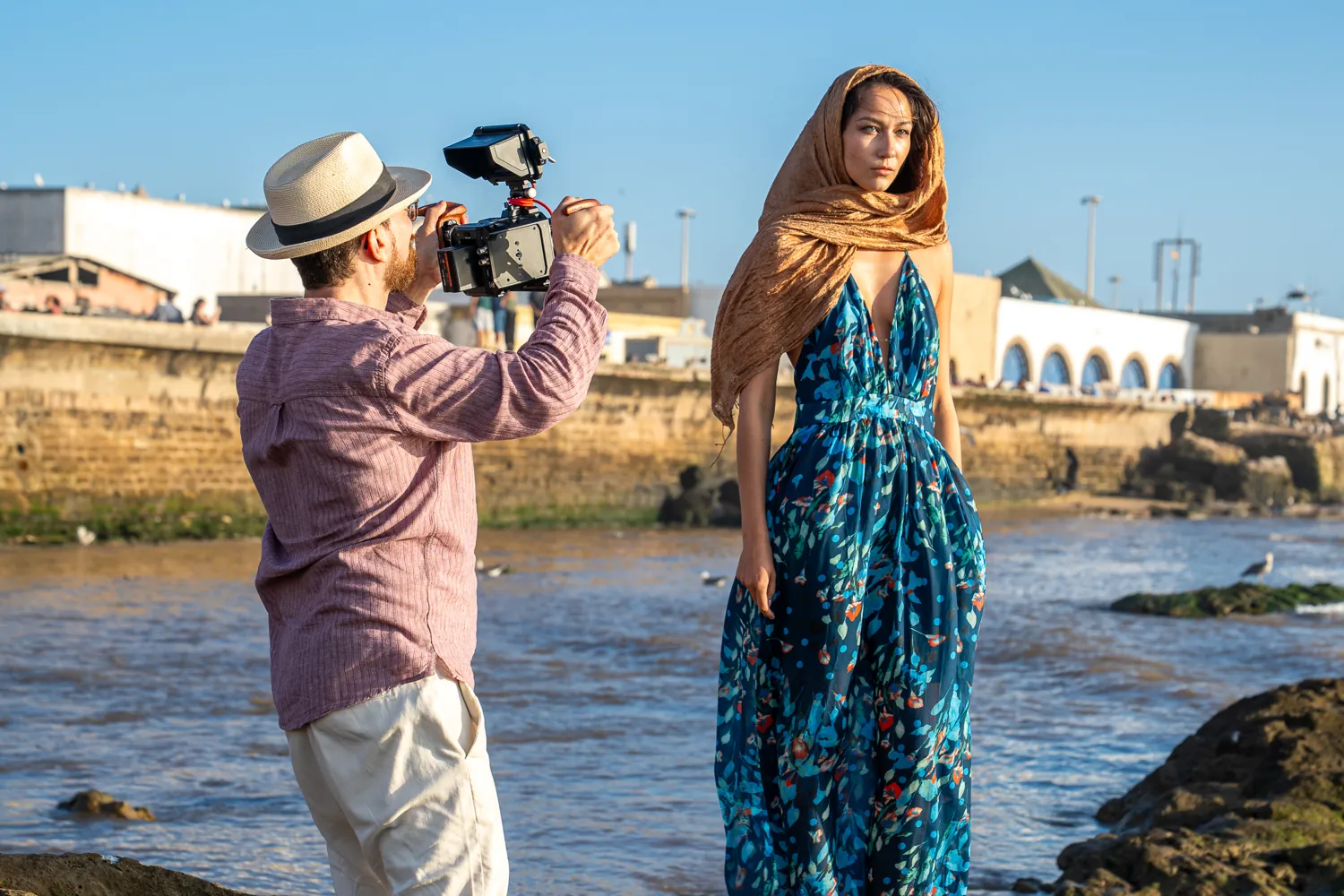
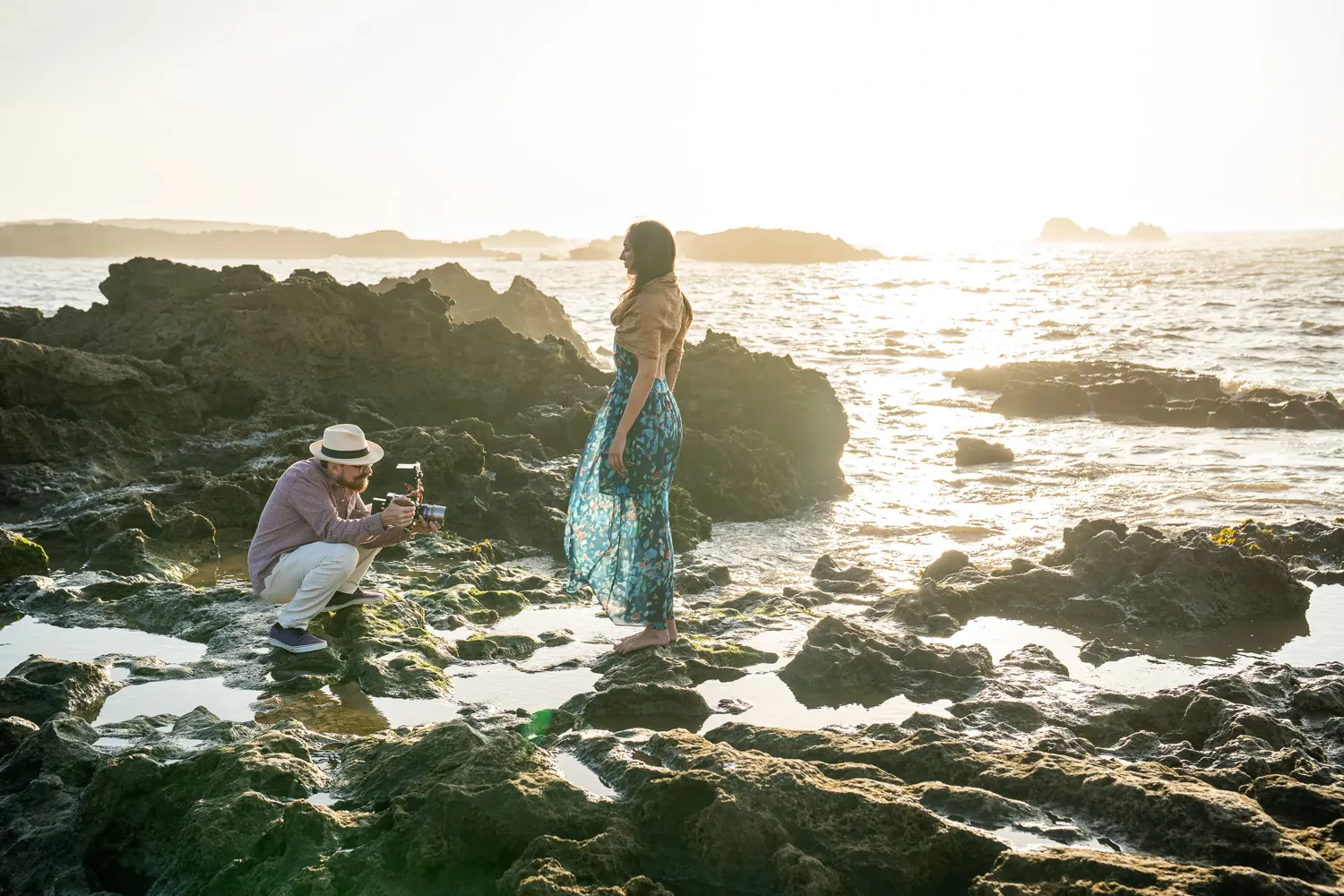
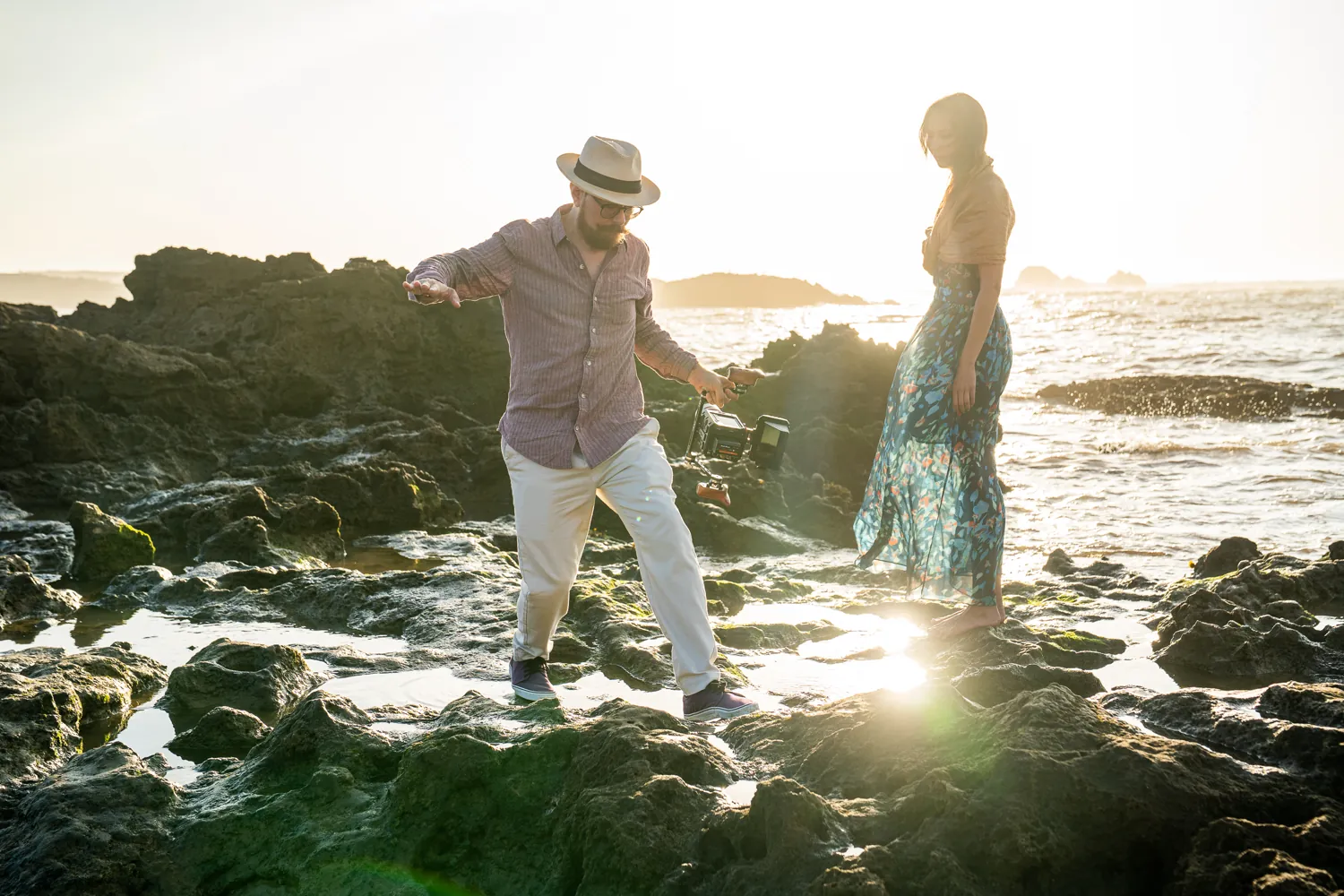
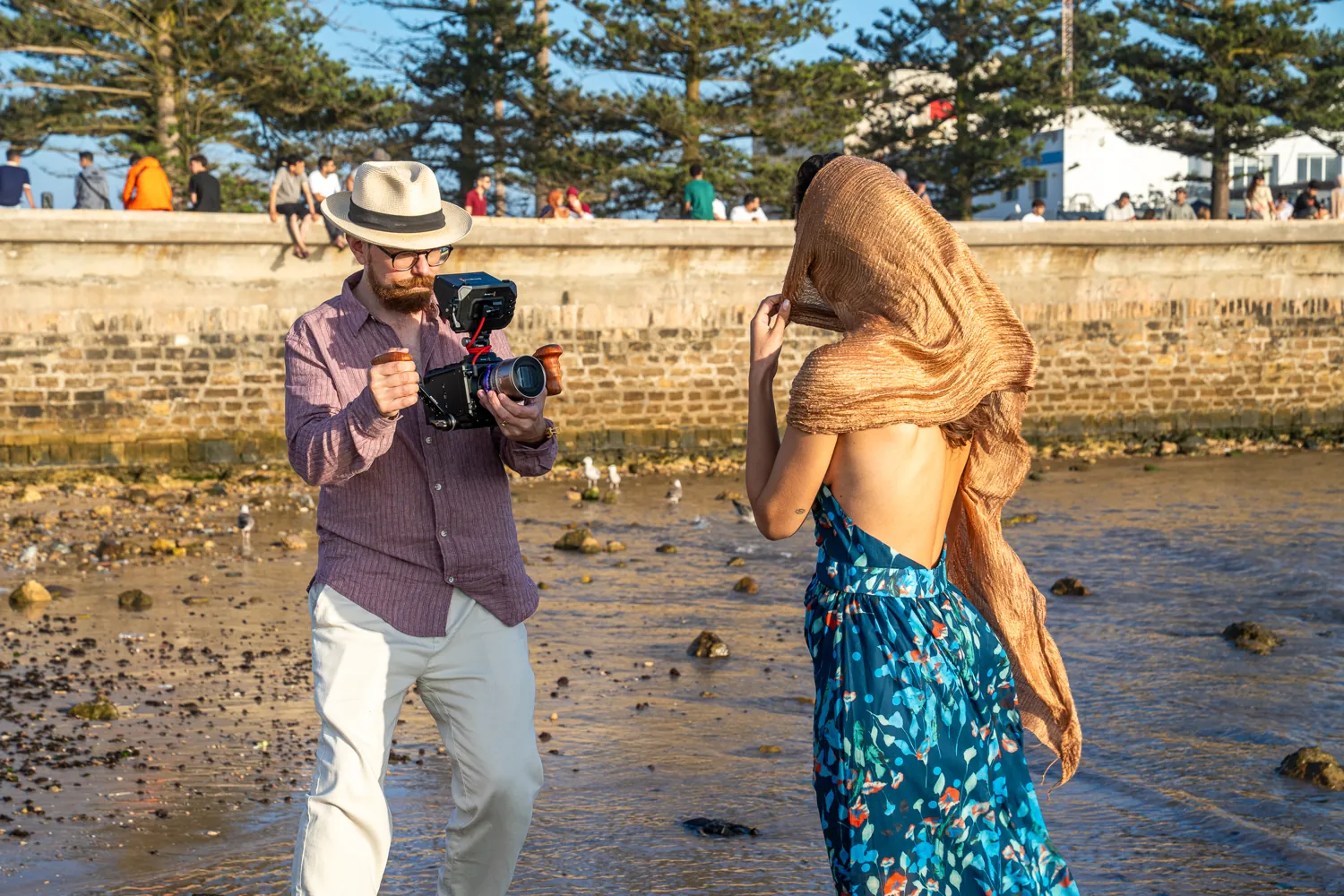
I went there, shot this and here is an end result that could be for a brand, rather than it simply being a collection of nice images.Dale Campbell
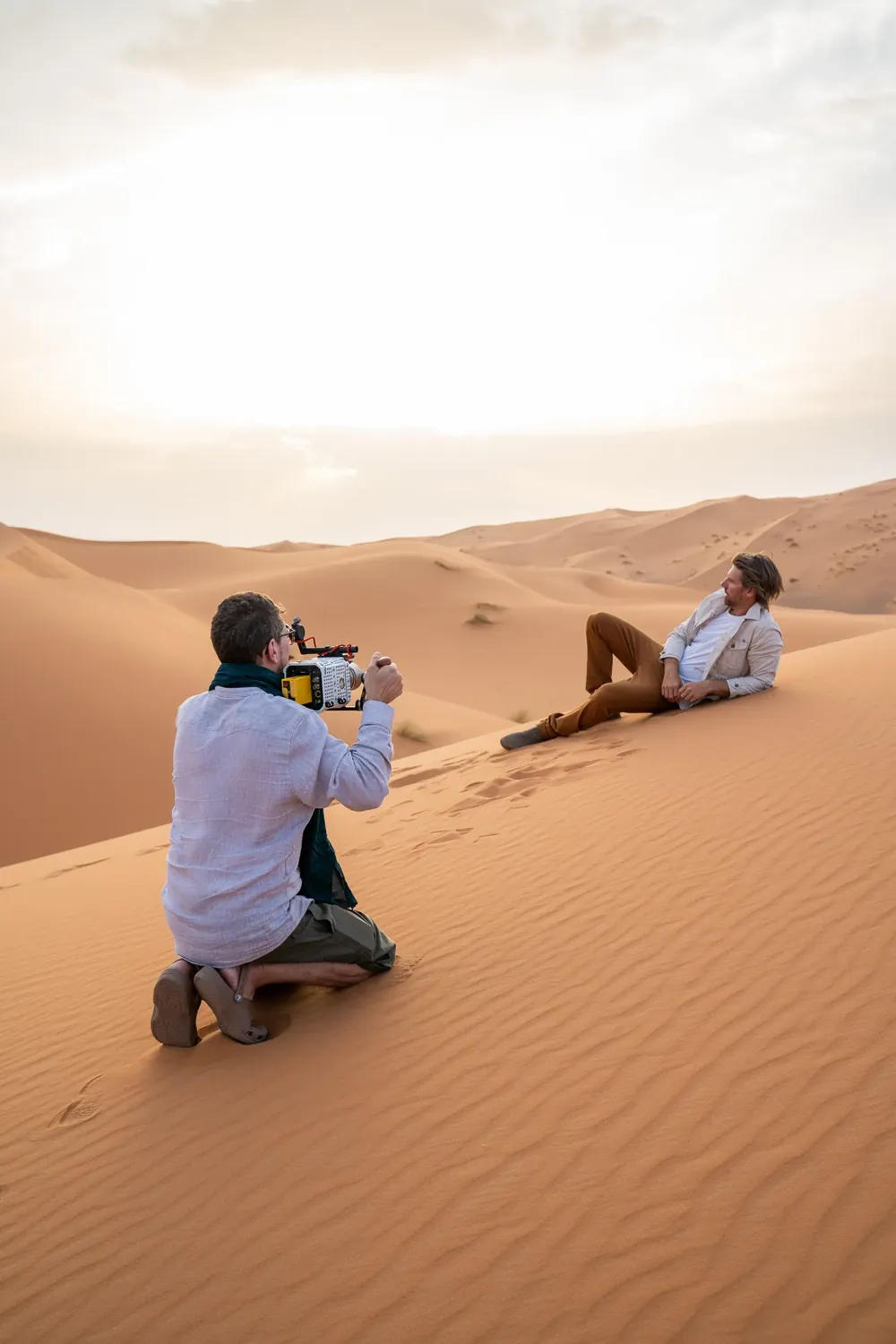
A very long lens, the sun filling the frame, and a person standing against it. Something he had wanted to try for a while.
“The big variable was how far away the talent needed to be.”
A vintage Olympus Zuiko 500mm mirror lens, bought used from Japan for around US$165. Fixed aperture, around f/8, and small enough to travel.
“A mirror lens works a little like a telescope.”
Too close and the sun would fall out of focus. Rough tests at home and a lot of arithmetic put his subject about 500 metres away, across two dunes.
“Dunes are different. Even if the large ones are roughly where you expect them, you cannot arrive and assume the positions and elevations will work.”
Once the sun was where they wanted it, there was a window of about six minutes. They shouted across the dunes to line it up.
“I think we had six minutes at most before it disappeared.”
His habit: begin with the tripod as low as possible. When the sun reaches the horizon, extend the tripod and you effectively get another go.
“If you start at full extension, once the sun has gone you cannot get any higher.”
James is the person against the sun in the hero shot, about 500 metres away on another dune. They lined it up by shouting across the sand.
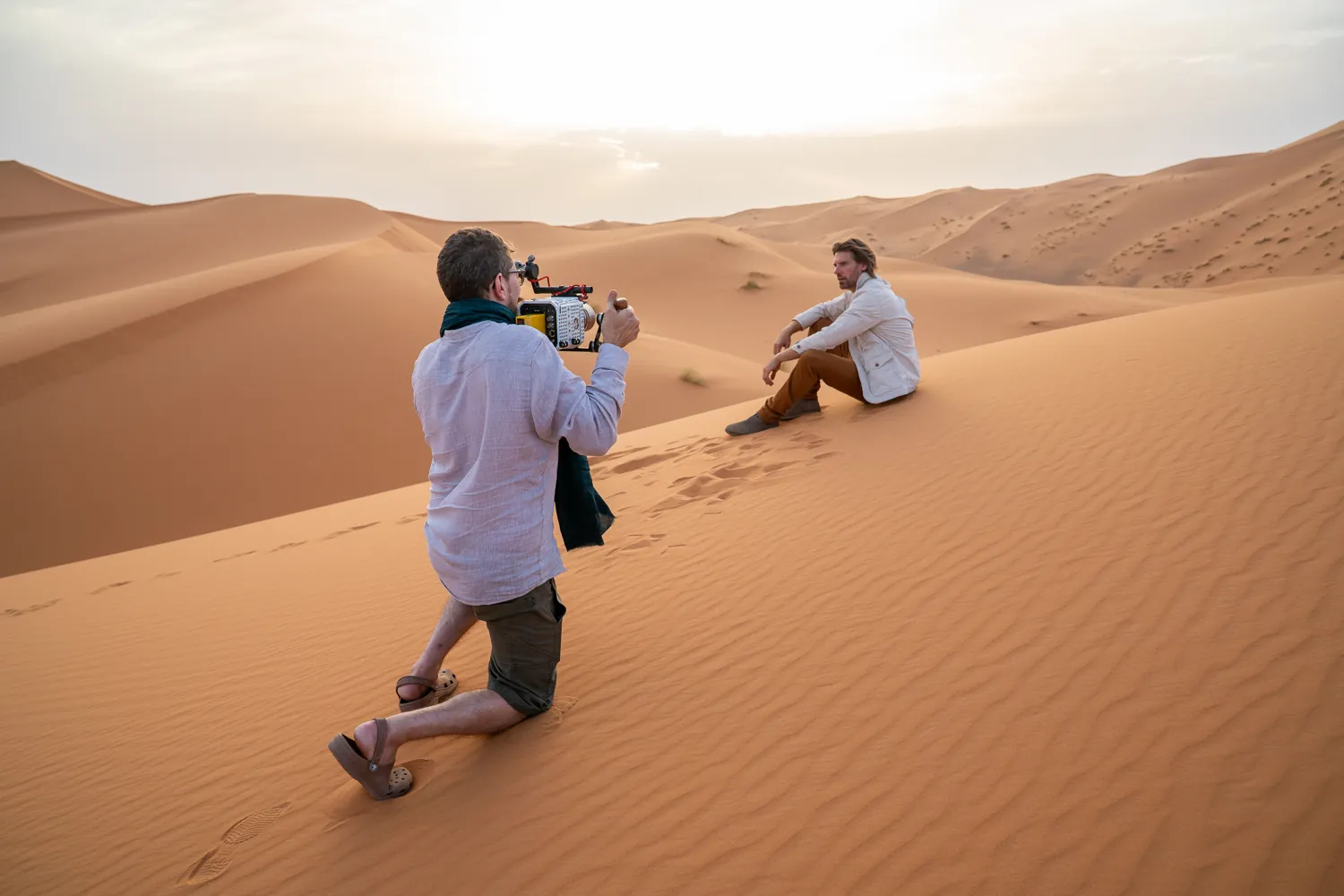
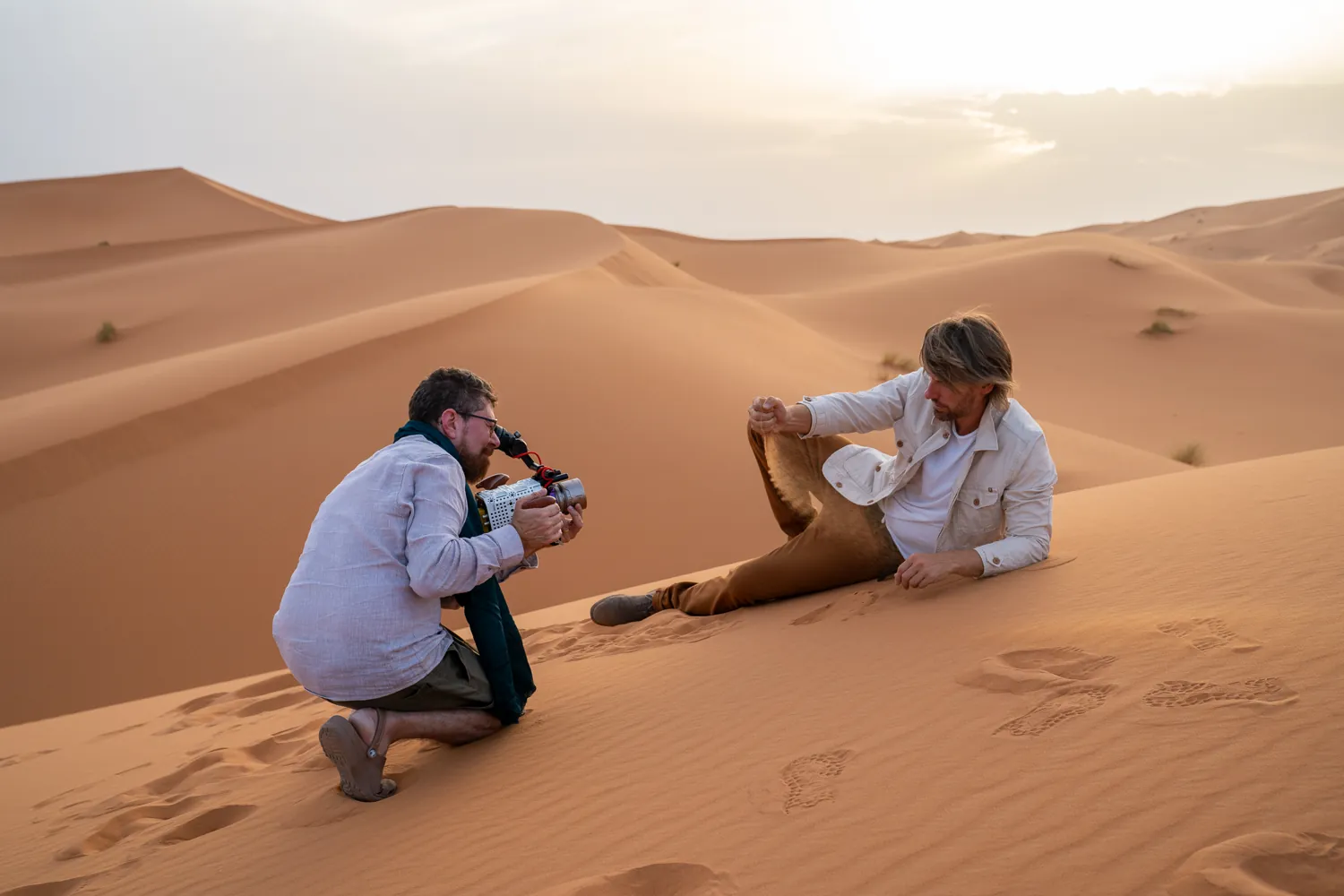
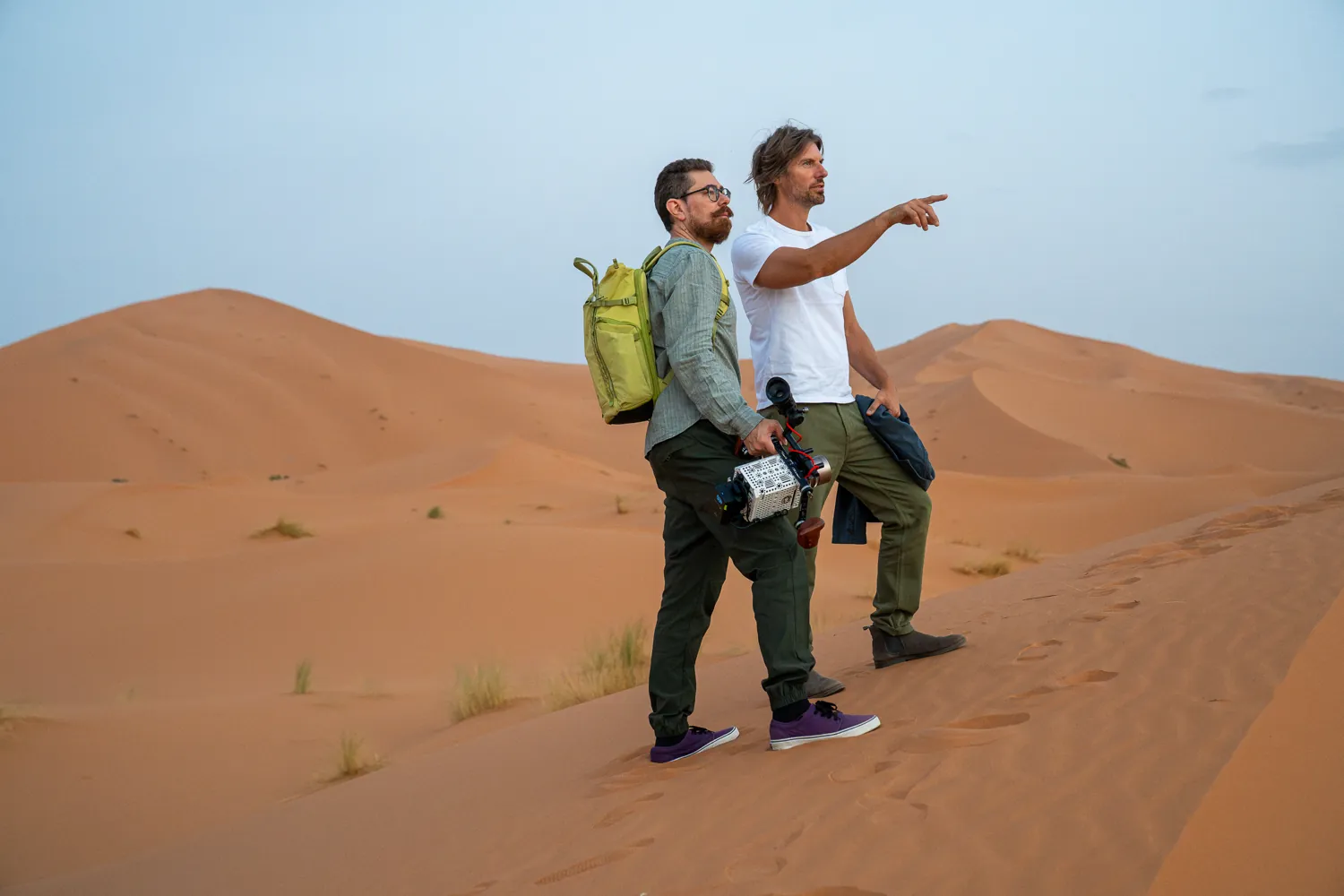
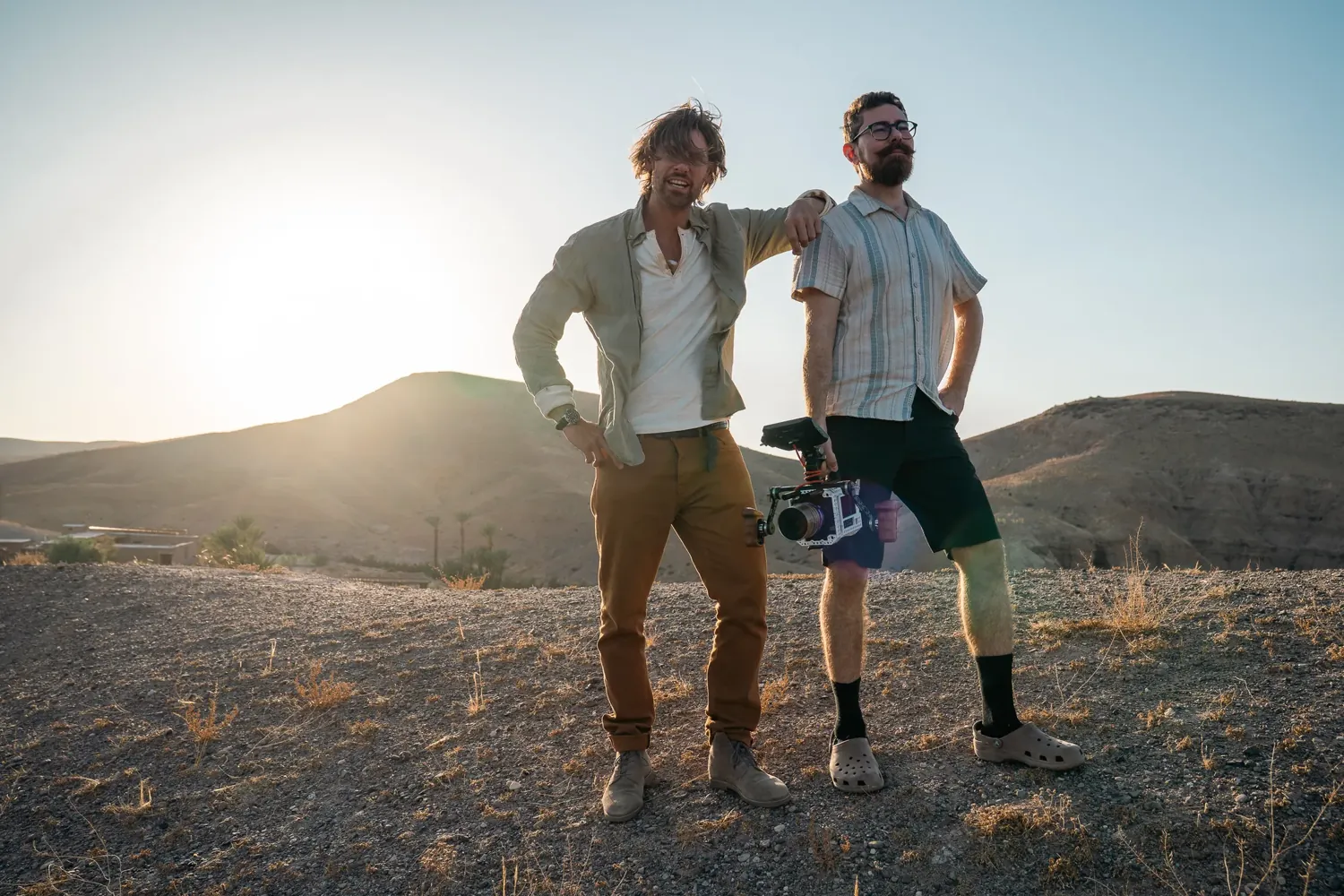
For the sunset we were basically shouting across the dunes to James, moving him slightly left or right and trying to get everything lined up.Dale Campbell
Dale used every recording resolution on the project. He did not treat 12K as the goal. He chose the mode the shot needed.
When something was relatively still and meant to be looked at, he shot full resolution. Storage was not a constraint on this trip, so there was no reason not to.
“If something was relatively static and more of a beauty shot, I would generally shoot 12K.”
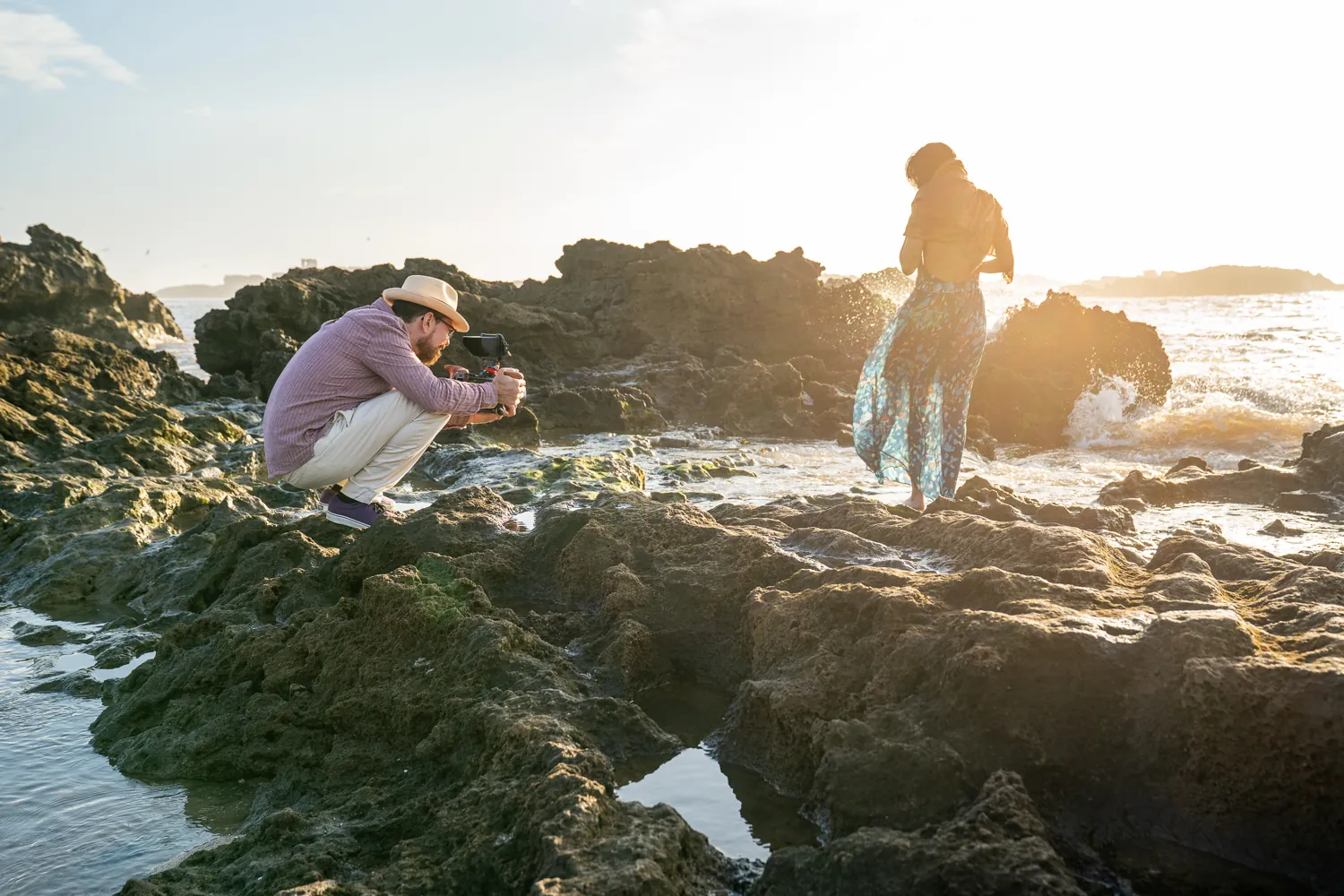
He could have shot 12K and cropped. He chose the 9K Super 35 window so that he was framing, and judging focus, for exactly the area he would use, with extra reach from the lens.
“If I choose 9K, I am framing for 9K and I am focusing for 9K. Everything becomes a little more intentional.”
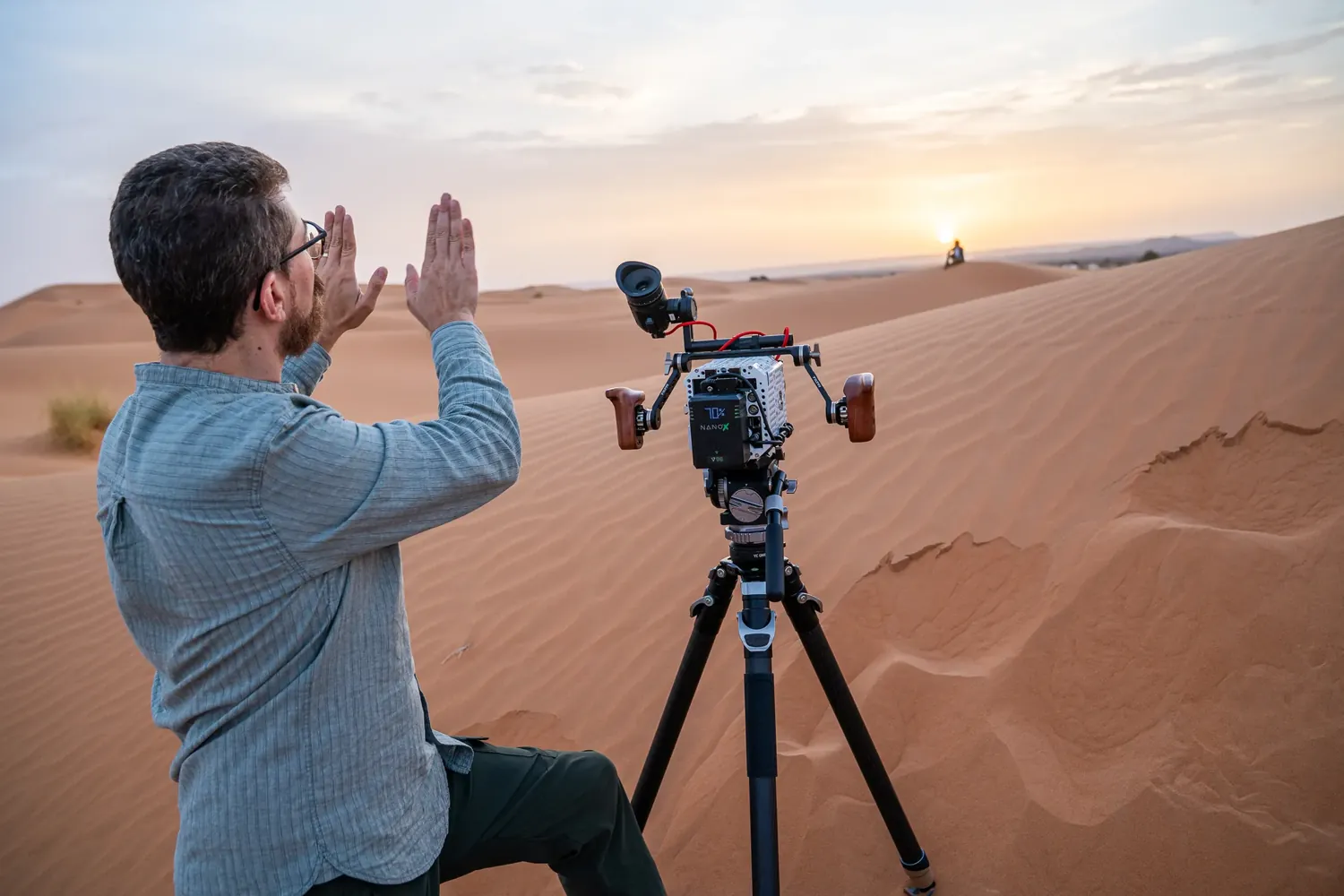
Plenty of resolution without the data load of 12K. For most of what he shoots now, it is the happy middle.
“Most of the time now I naturally gravitate towards 8K. It is a happy middle ground.”
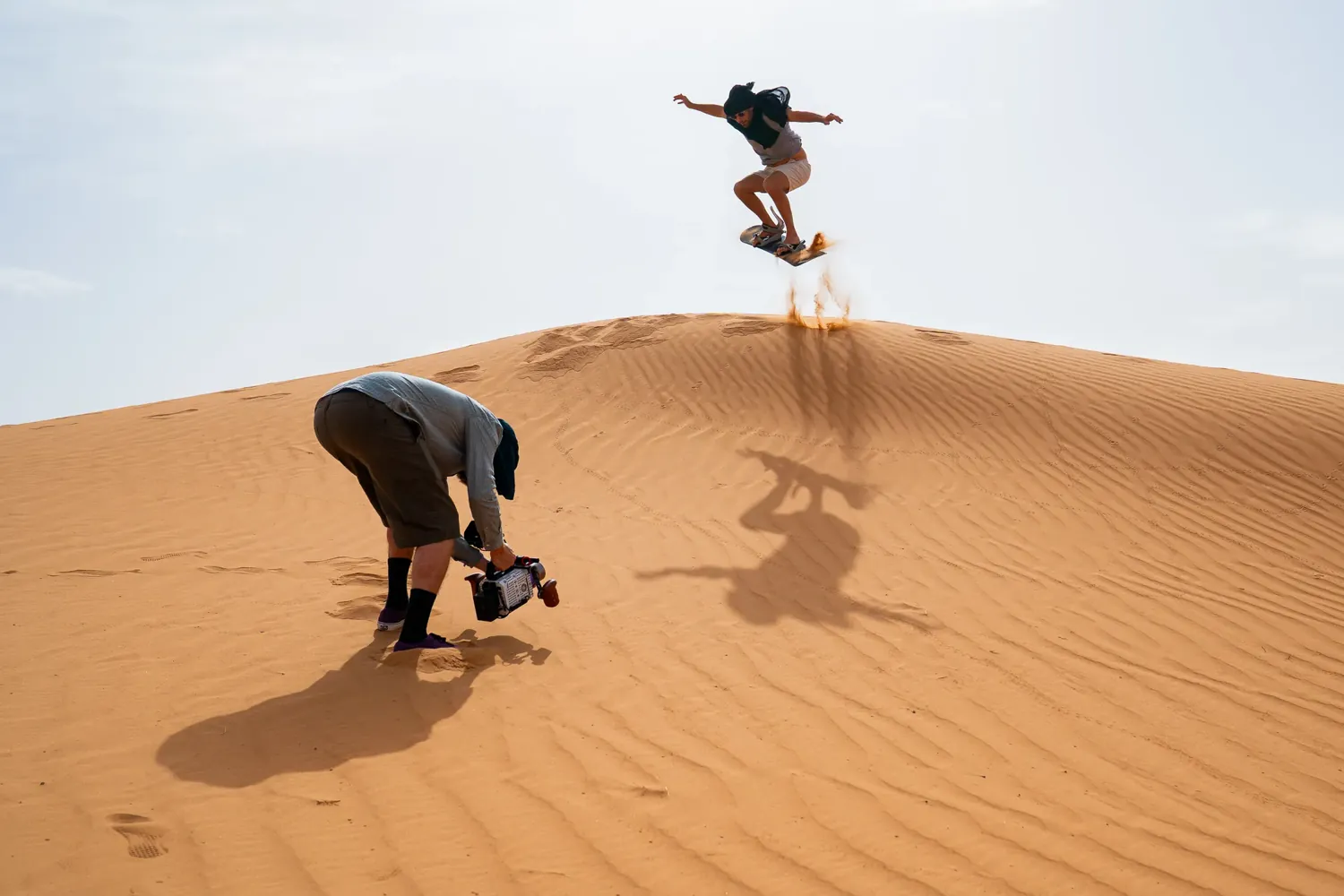
For aggressive handheld work and the motorbike sidecar, the faster sensor readout mattered more than resolution. The image is still beautiful, he says.
“The 4K image is still beautiful. I do not feel that I am missing resolution by choosing it.”
He wanted extra frame rate, so he came out of 3:2 open gate and went to 16:9 to reach 84 fps. It also gave a wider aspect after the anamorphic de-squeeze.
“I came out of 3:2 open gate and went to 16:9 to get up to 84 fps.”
The biggest change for me is probably confidence. I have a better understanding now of the different modes, how I want to build the camera and what I need for the particular job in front of me.Dale Campbell, on nine months with the PYXIS 12K
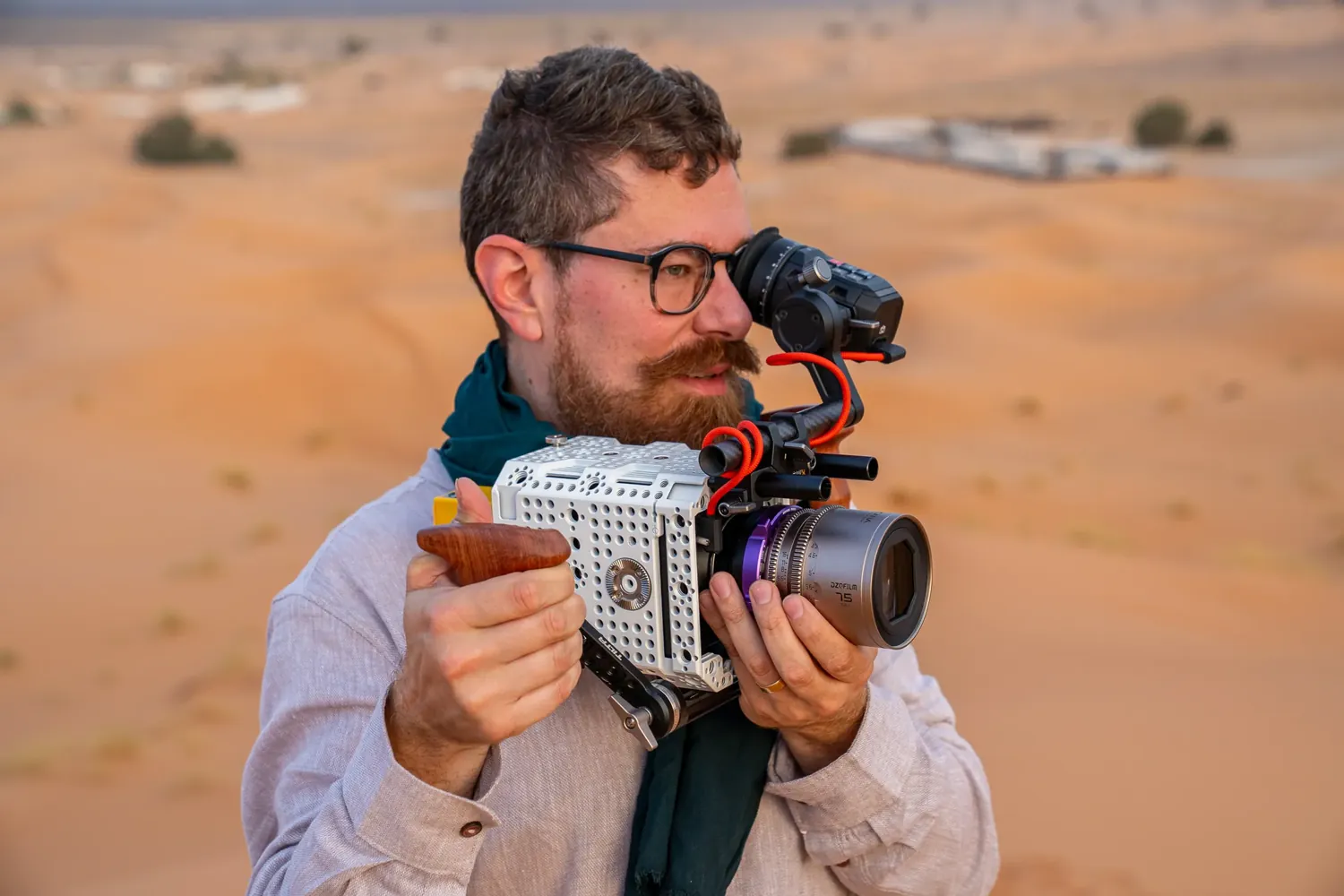
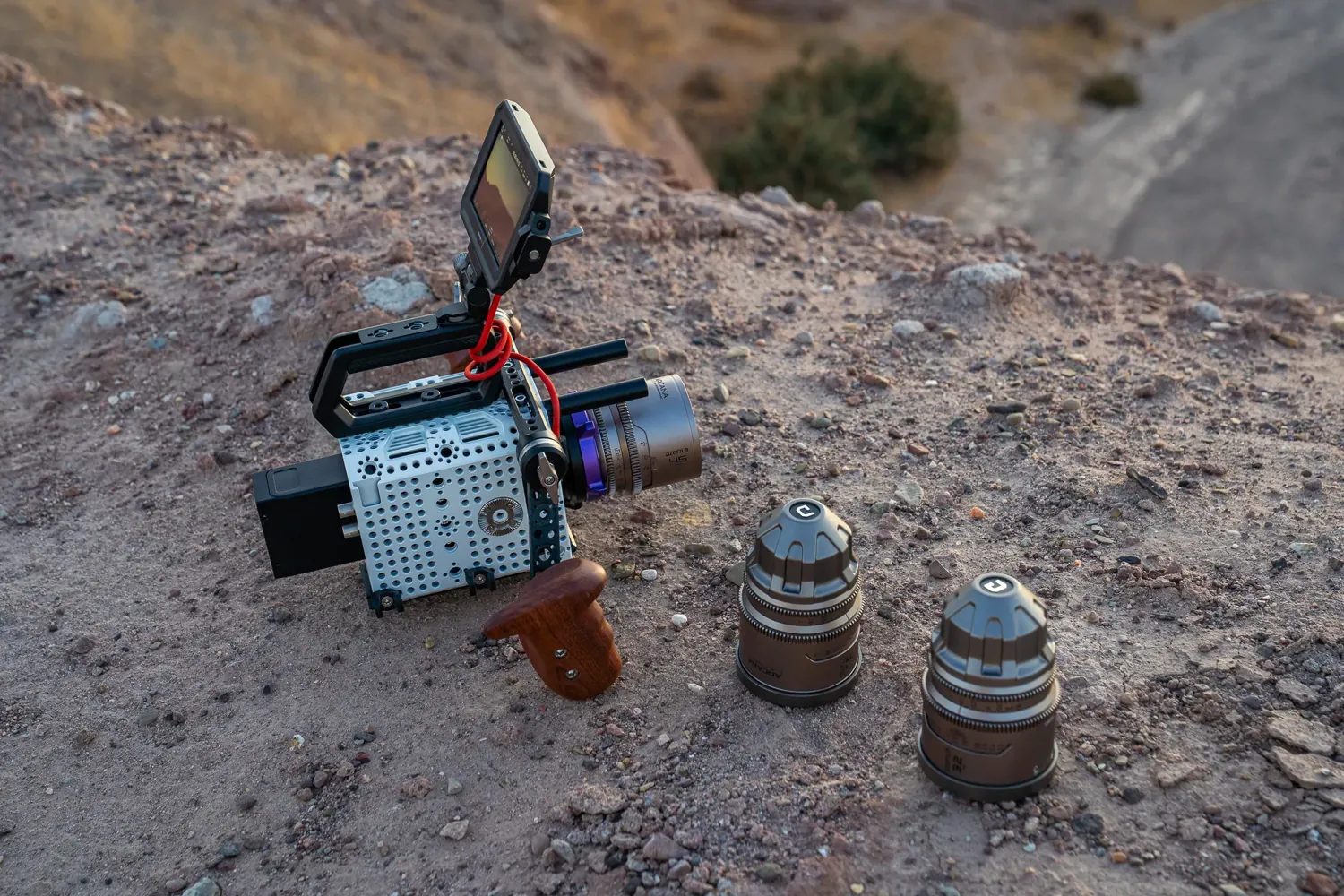
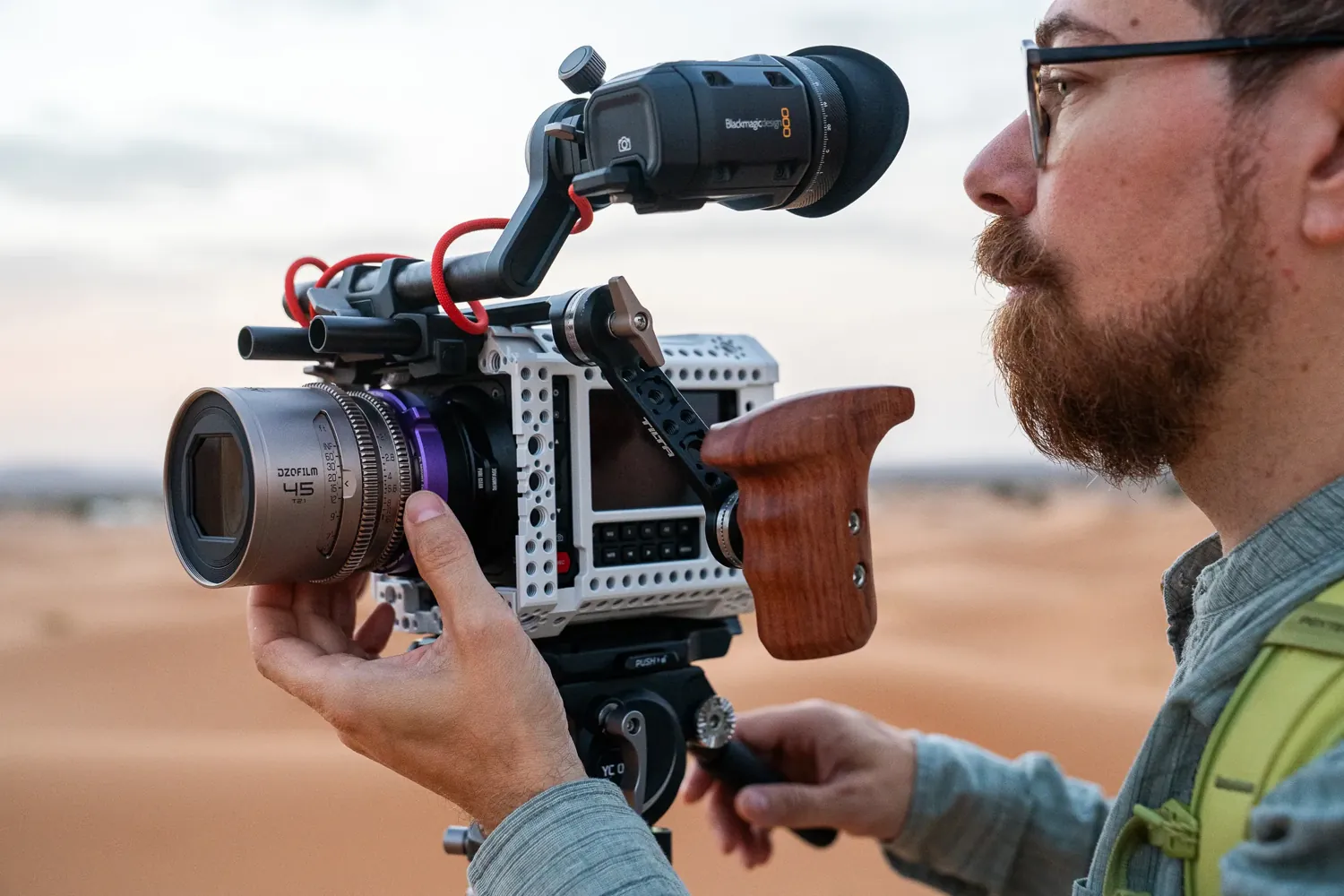
He travelled with the camera completely broken down, because it packed better, and rebuilt it around each shot. Along with the 500mm mirror lens, the lenses weighed about 2.7 kg, which for him is very restrained.
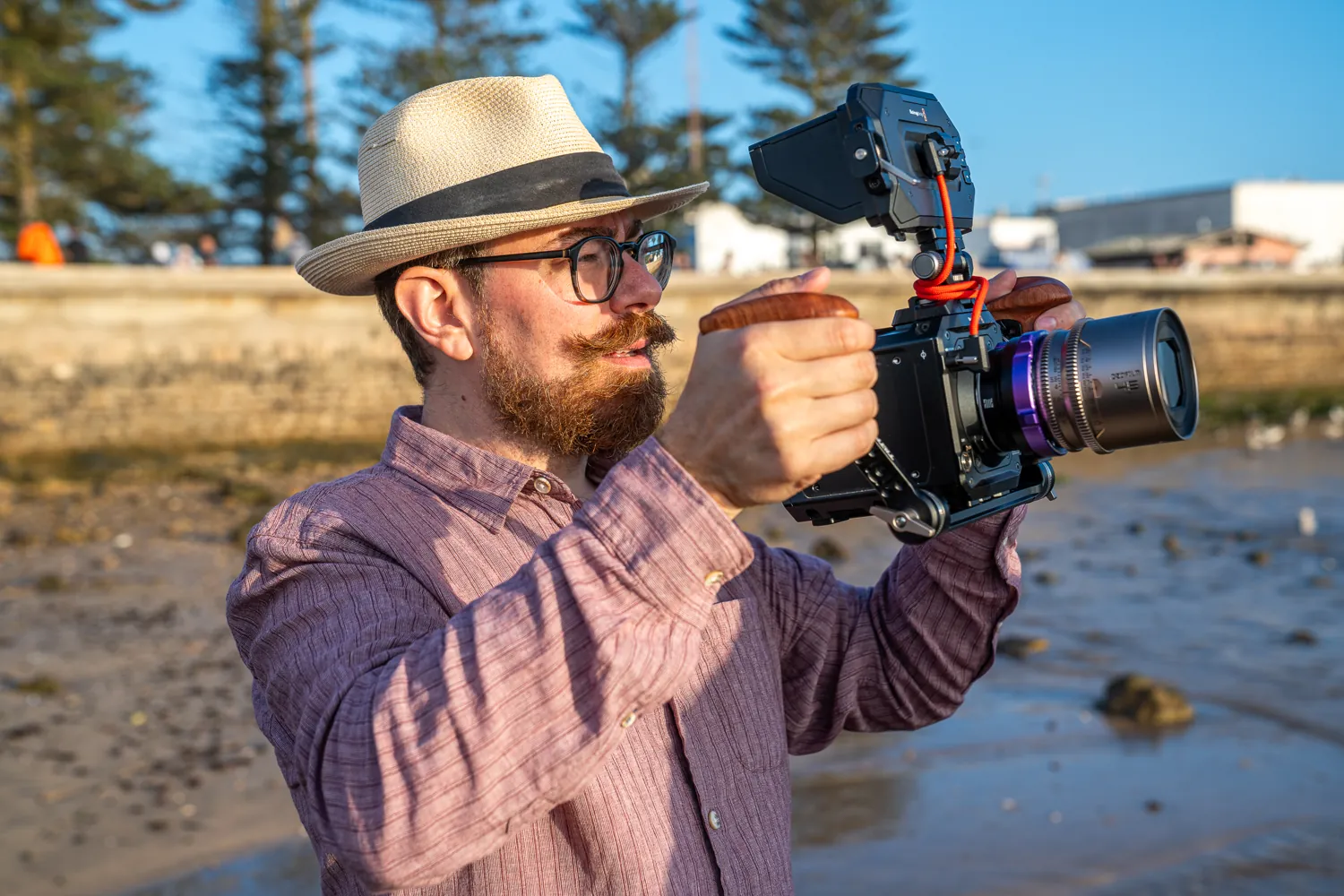
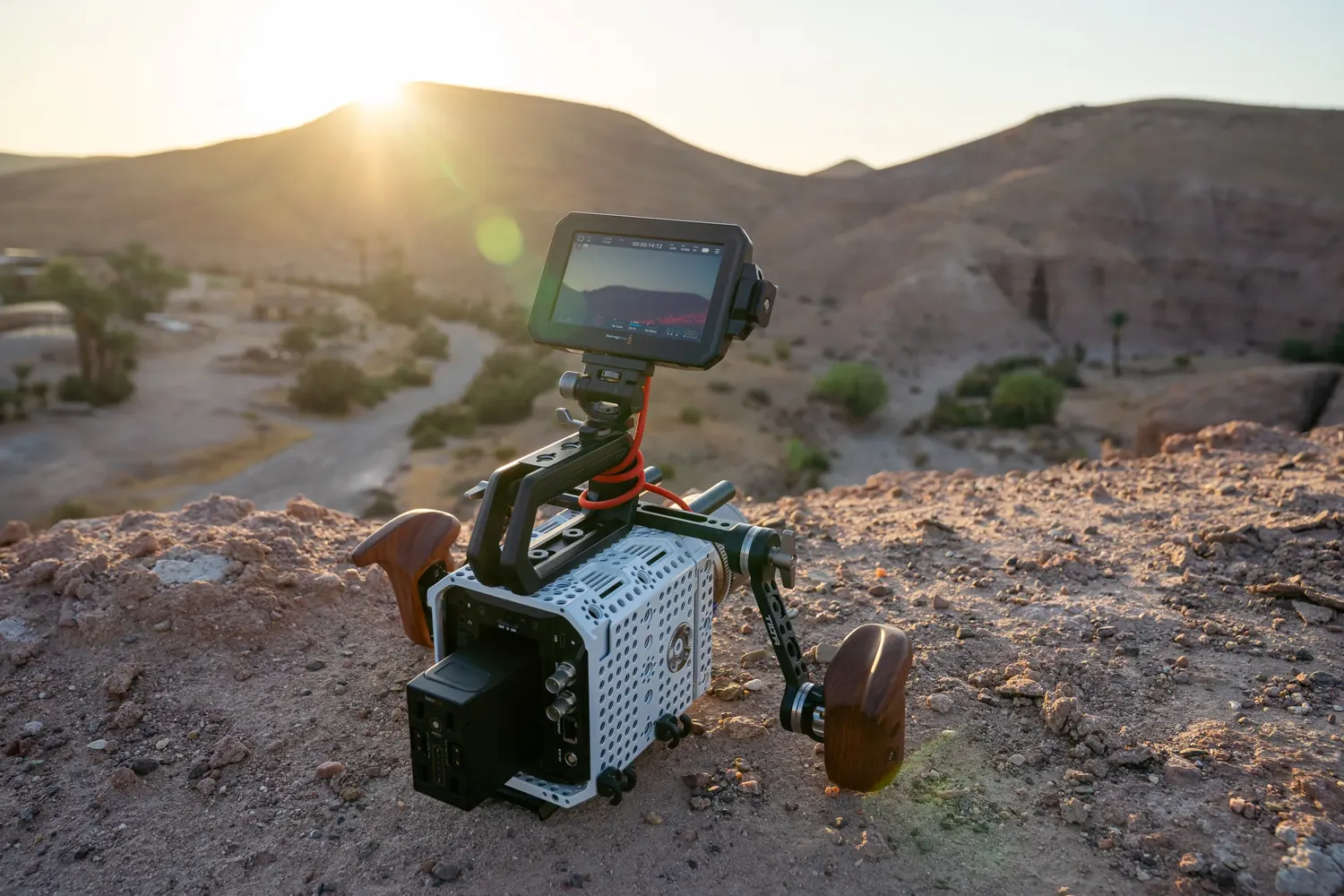
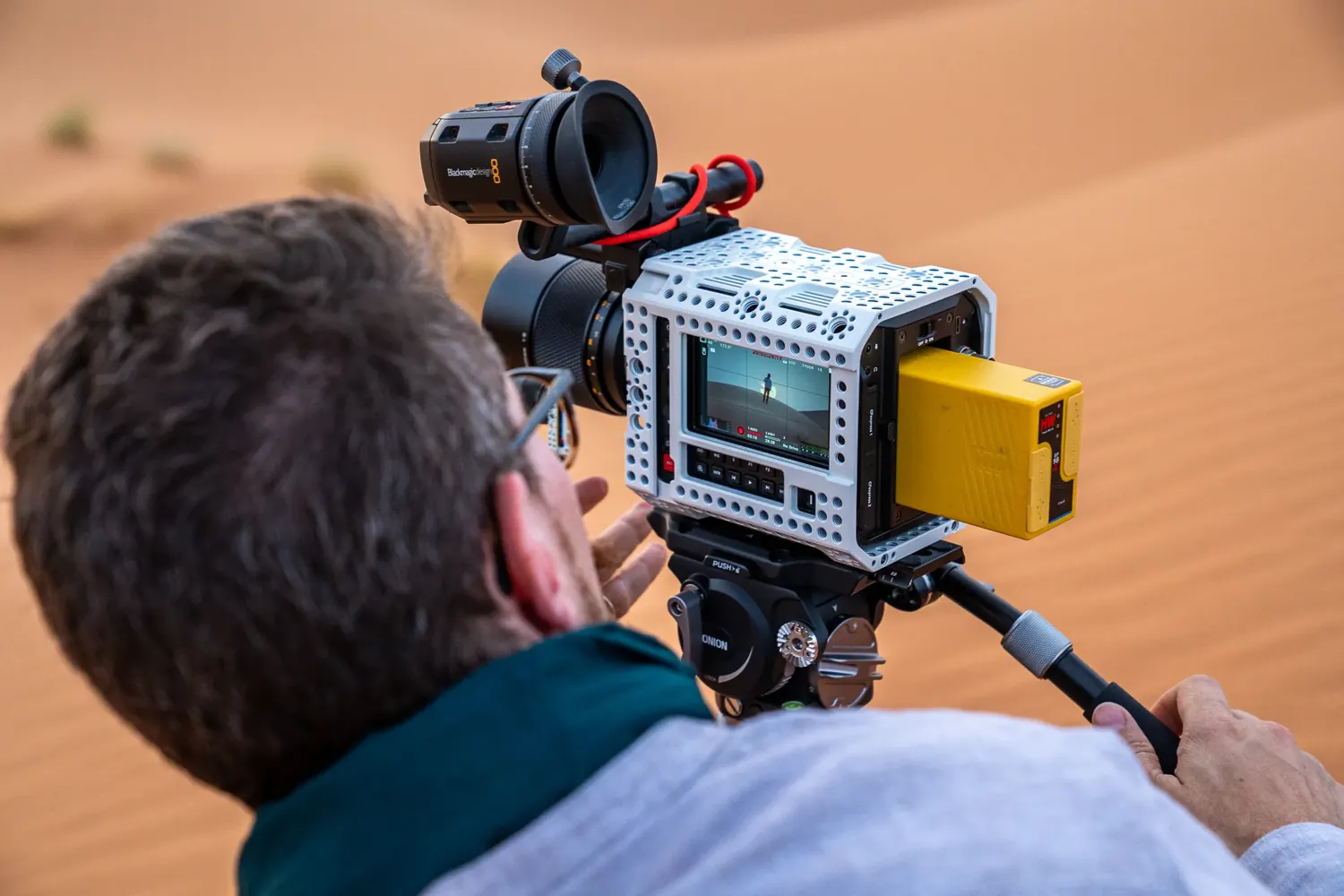
Wooden side handles, the PYXIS Monitor mounted straight on top, and BPU batteries.
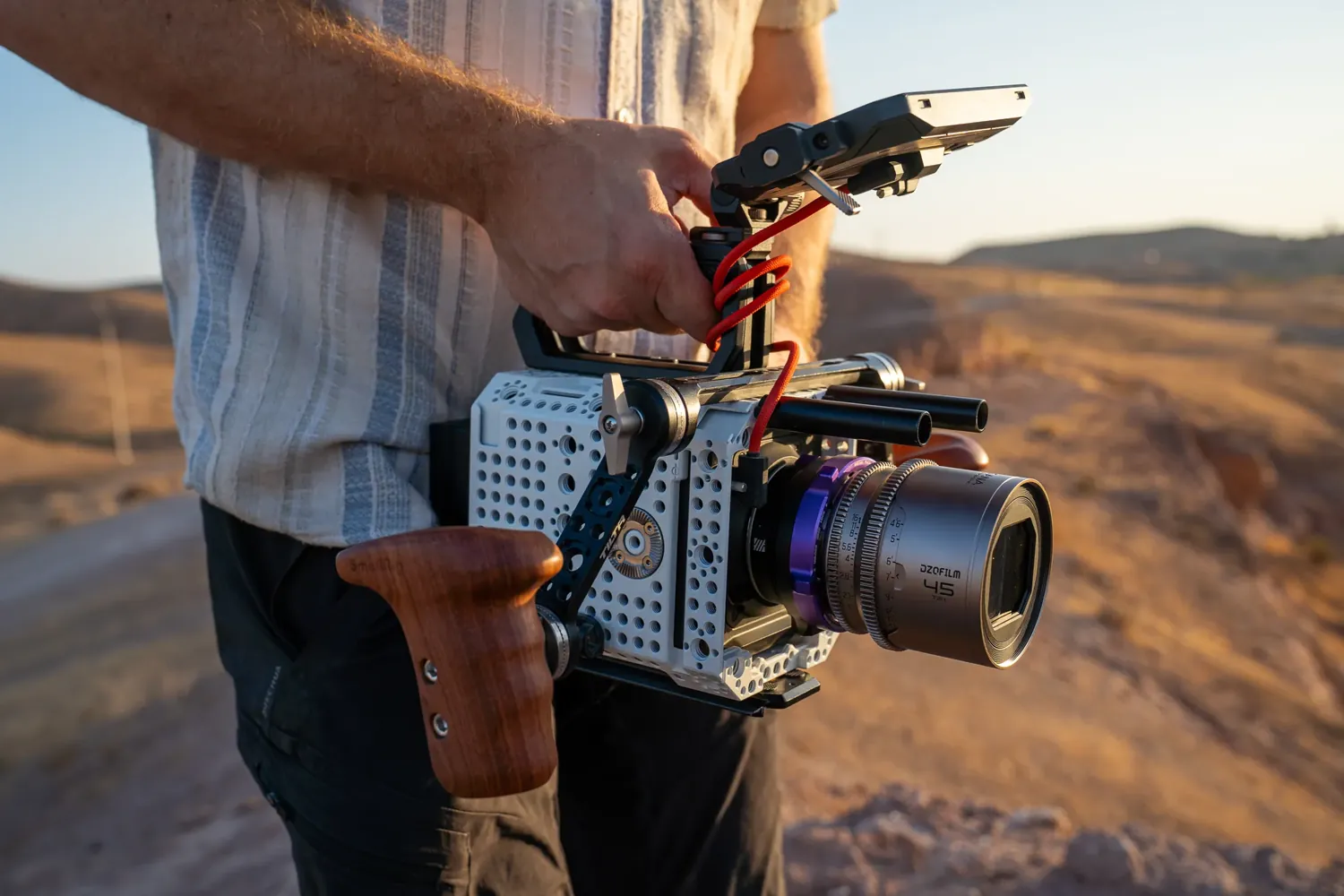
Essentially just the camera and the monitor. Tucked down by his side, people hardly notice it.
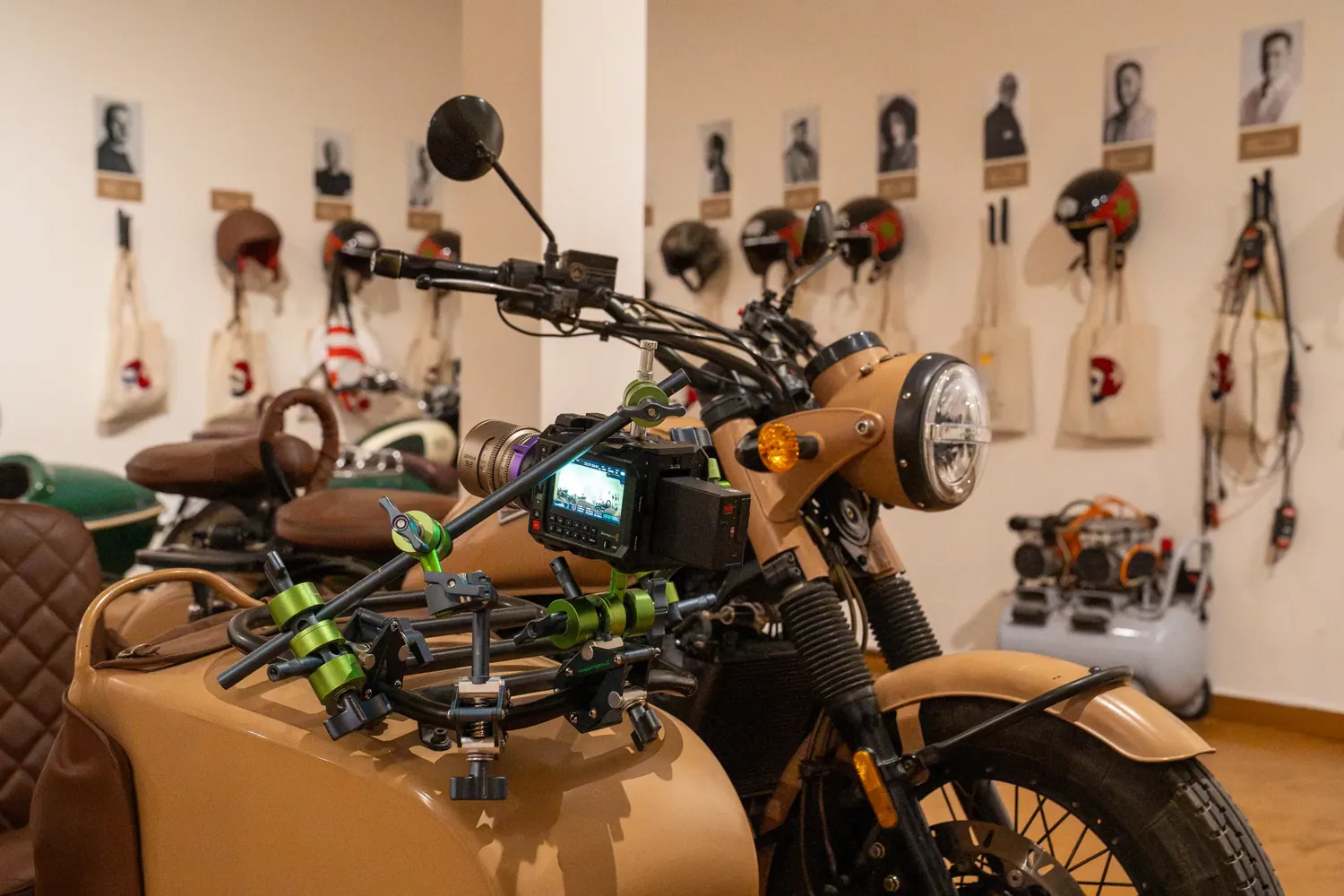
The bare camera body, with baby pins screwed straight into the mounting points on the camera. That was enough.
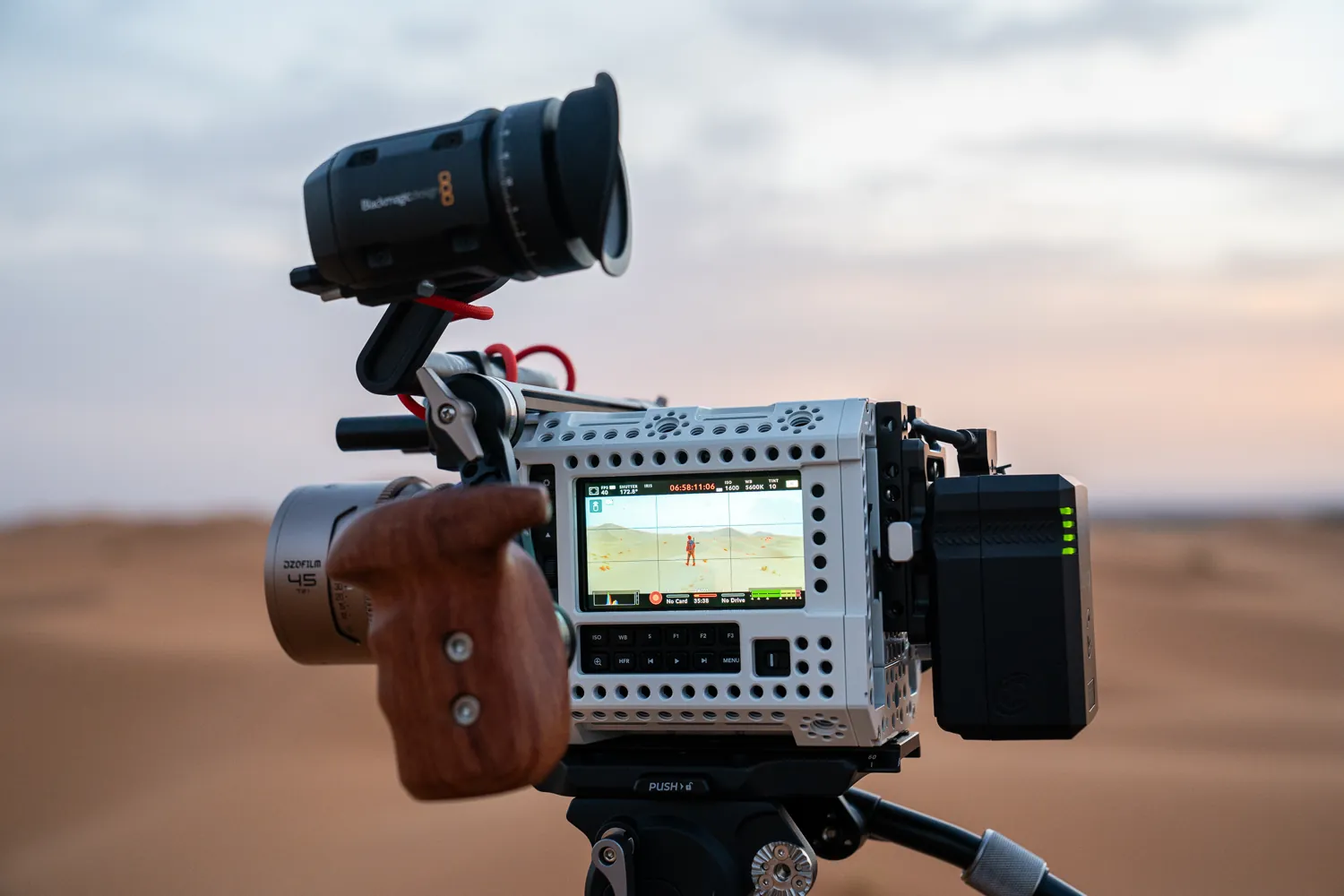
A custom white XLCS cage in a handheld configuration, with the EVF on a minimal rail mount.
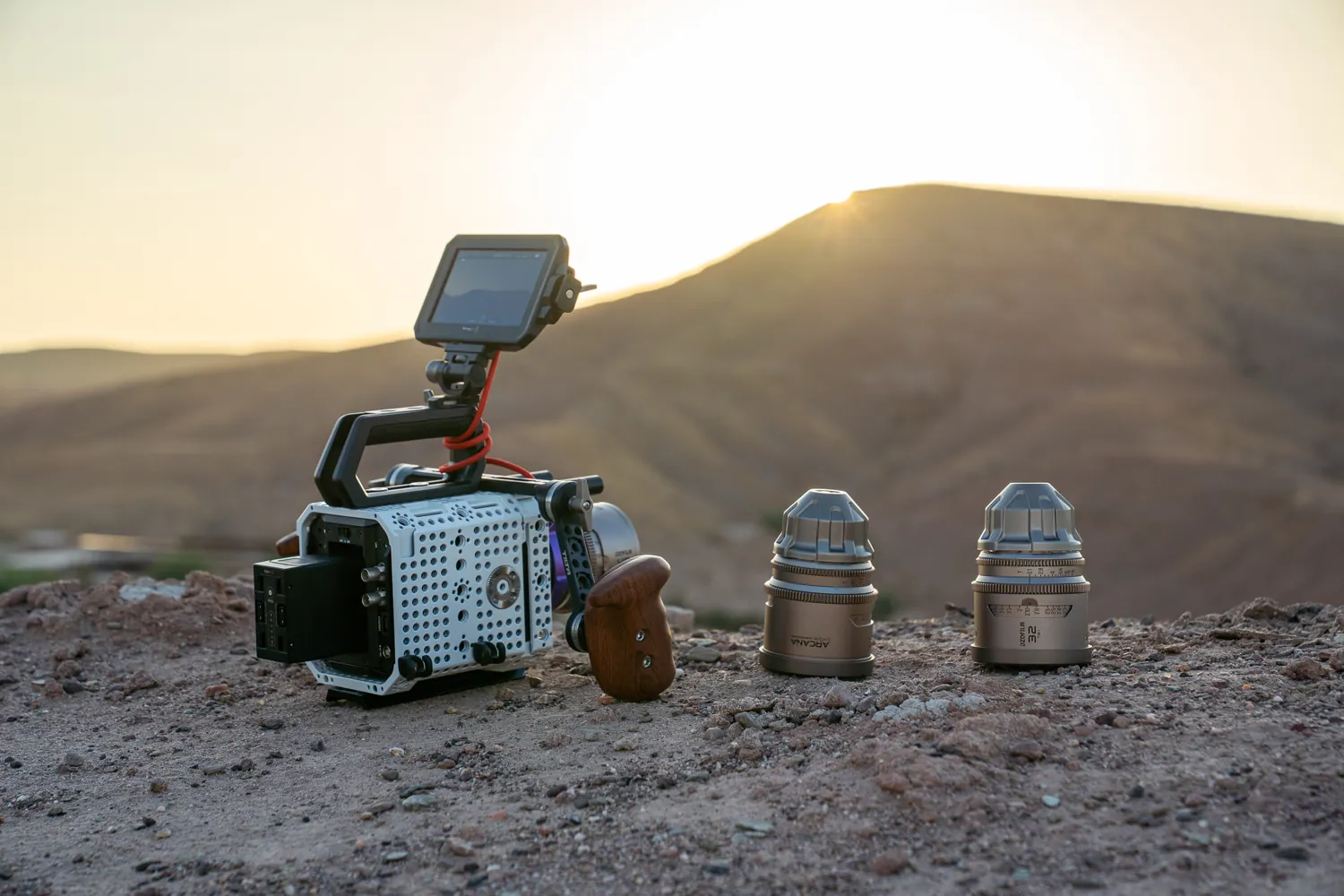
The URSA Cine top handle, with the PYXIS Monitor moved onto the EVF rail.
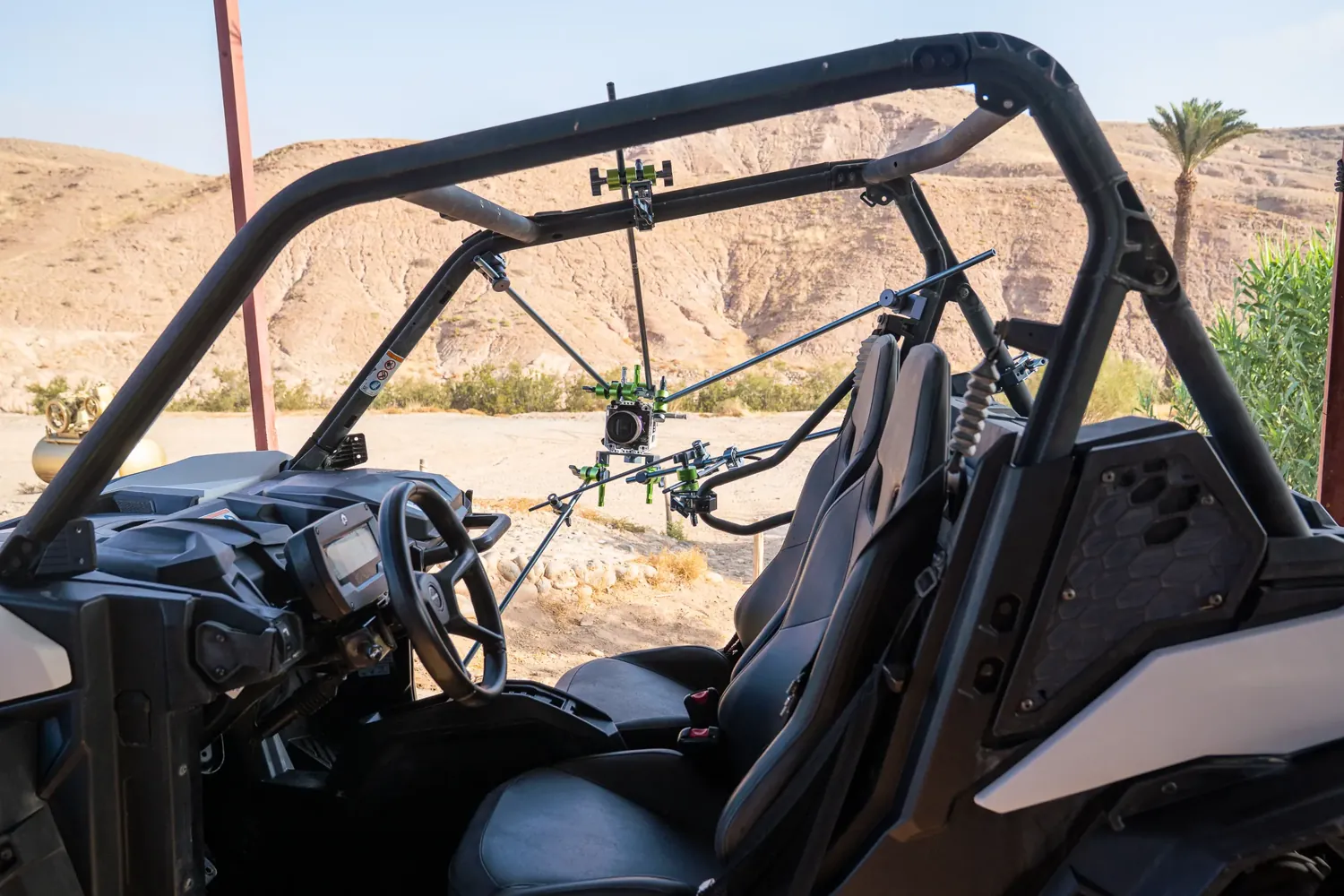
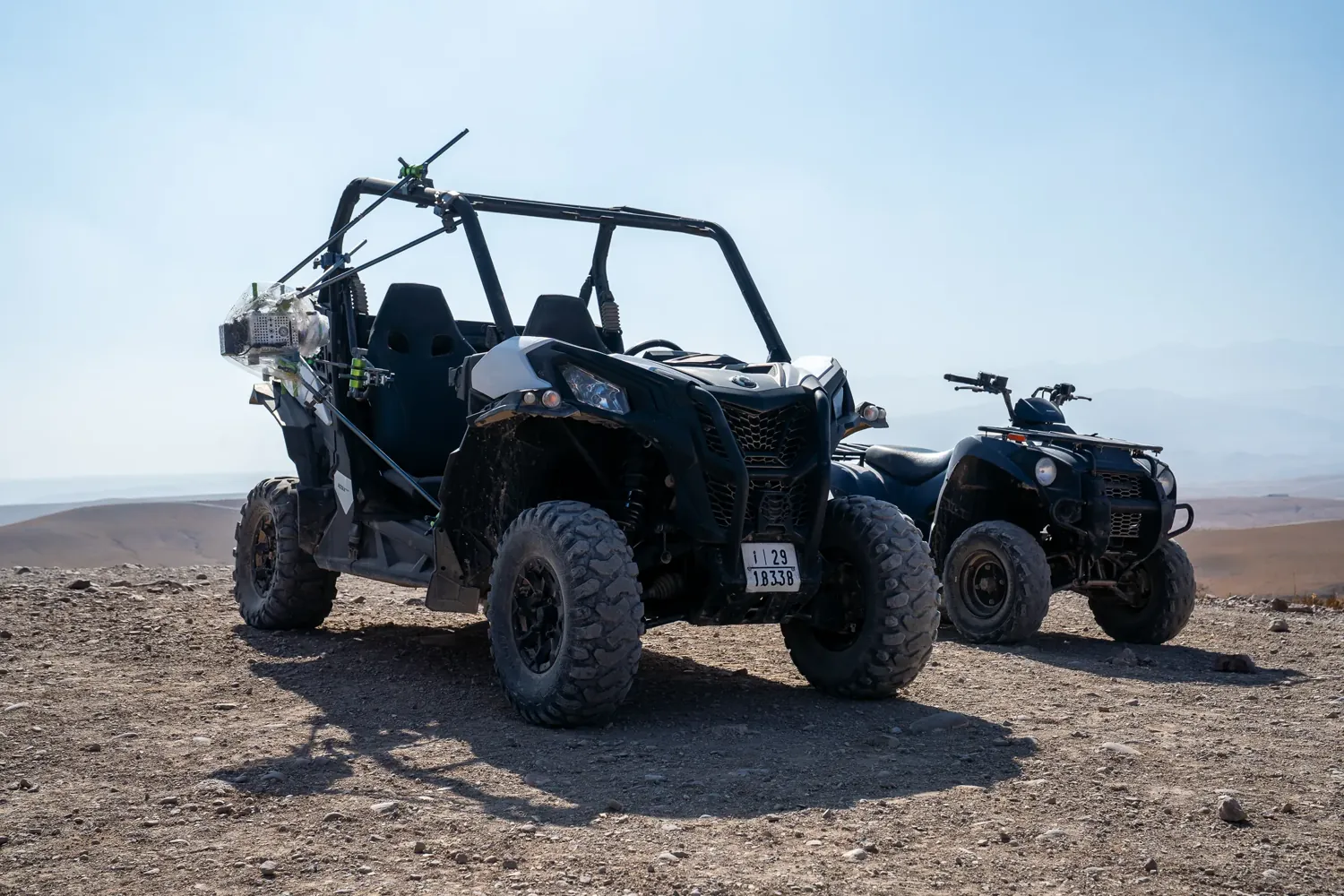
The cage stripped back again, with no monitor and no EVF, for the all-terrain vehicle shots.
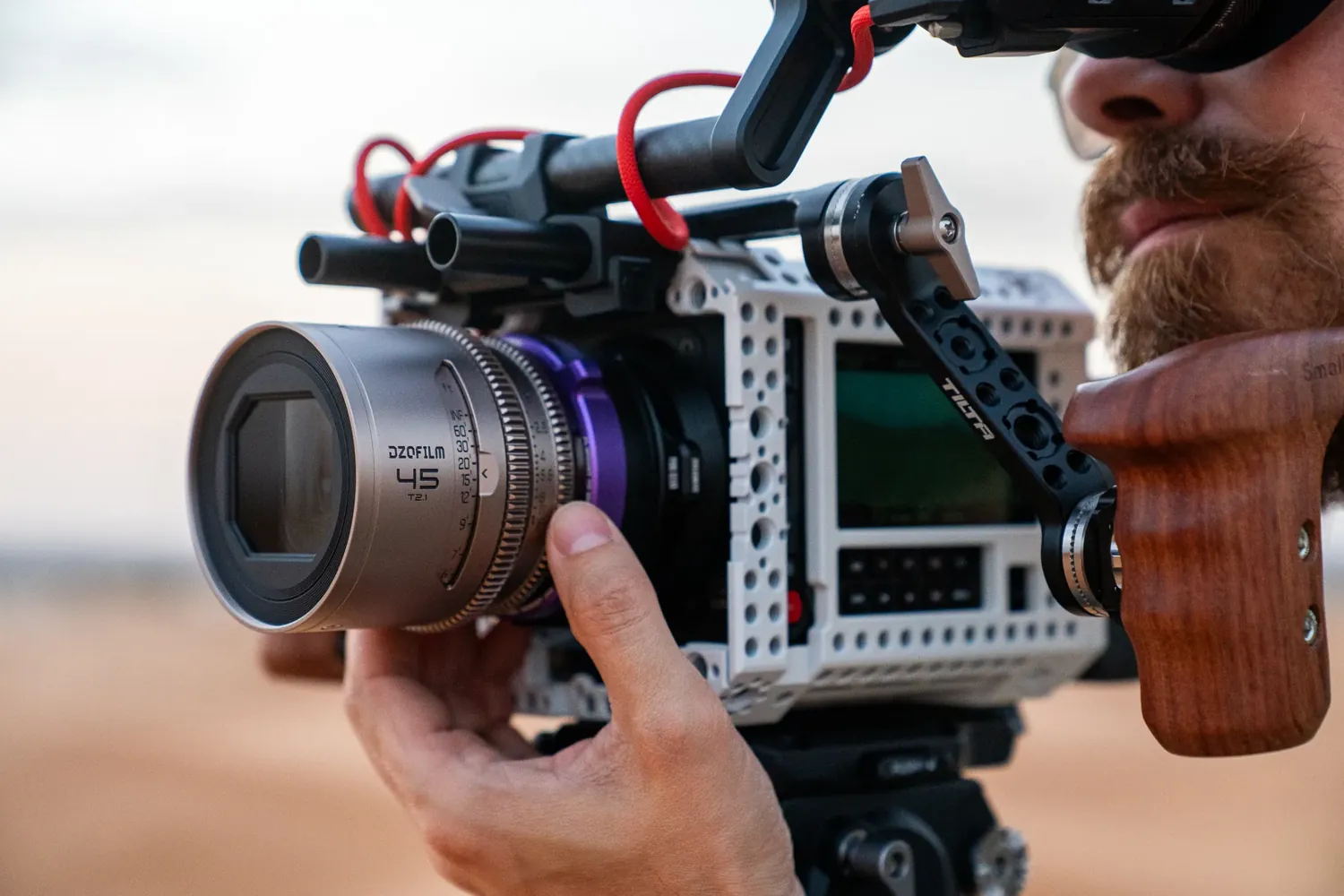
He rarely worries about the camera's temperature handling, but this was an extreme environment. One ATV-mounted shot left the camera outside for around two hours in direct sunlight, so XLCS made a white version of the cage.
You can be above 40°C in the desert and black metal sitting in direct sunlight can become much hotter than that.Dale Campbell
For the all-terrain vehicle material the cage was stripped back with no monitor and no EVF. Then it sat in direct sun for around two hours.
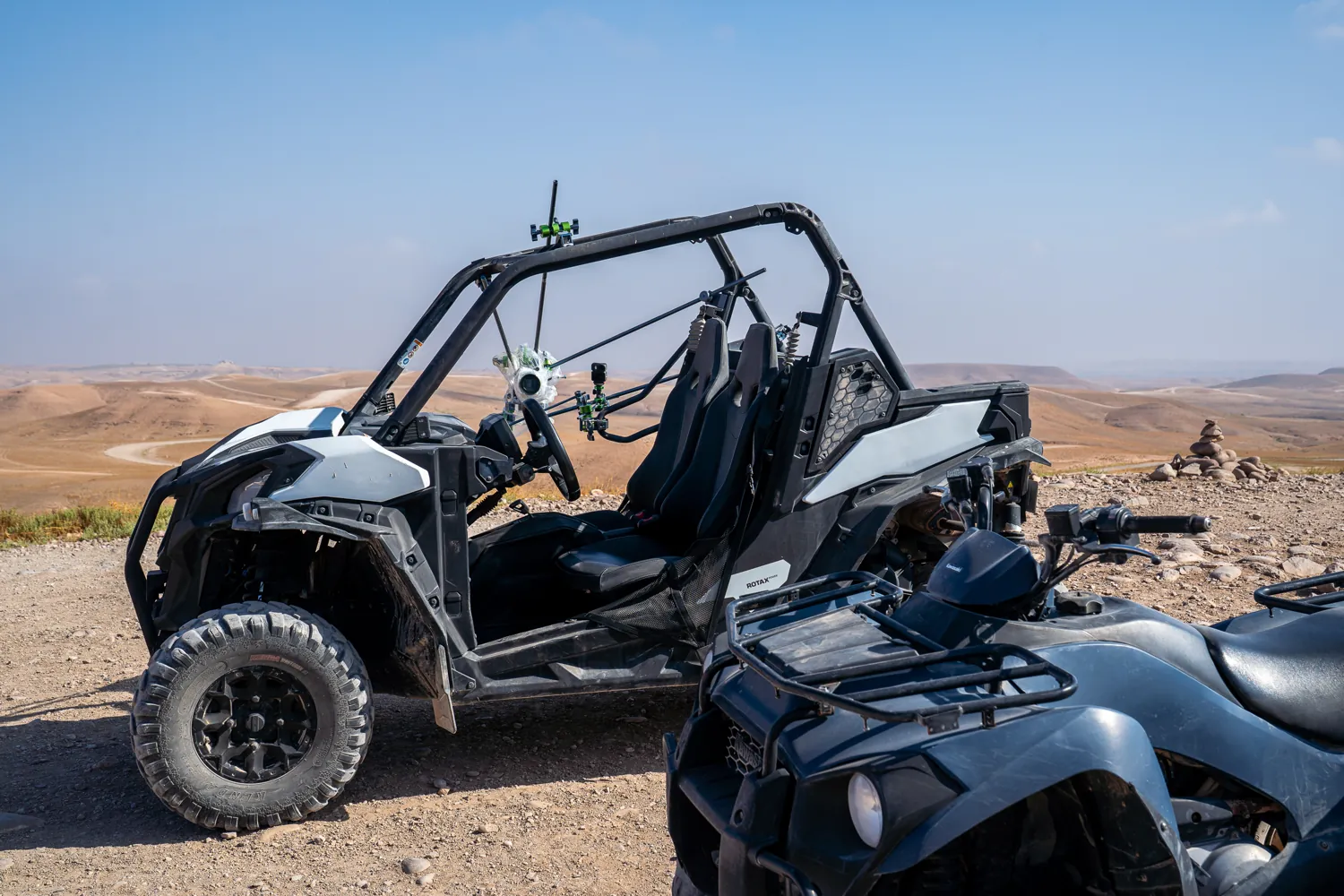
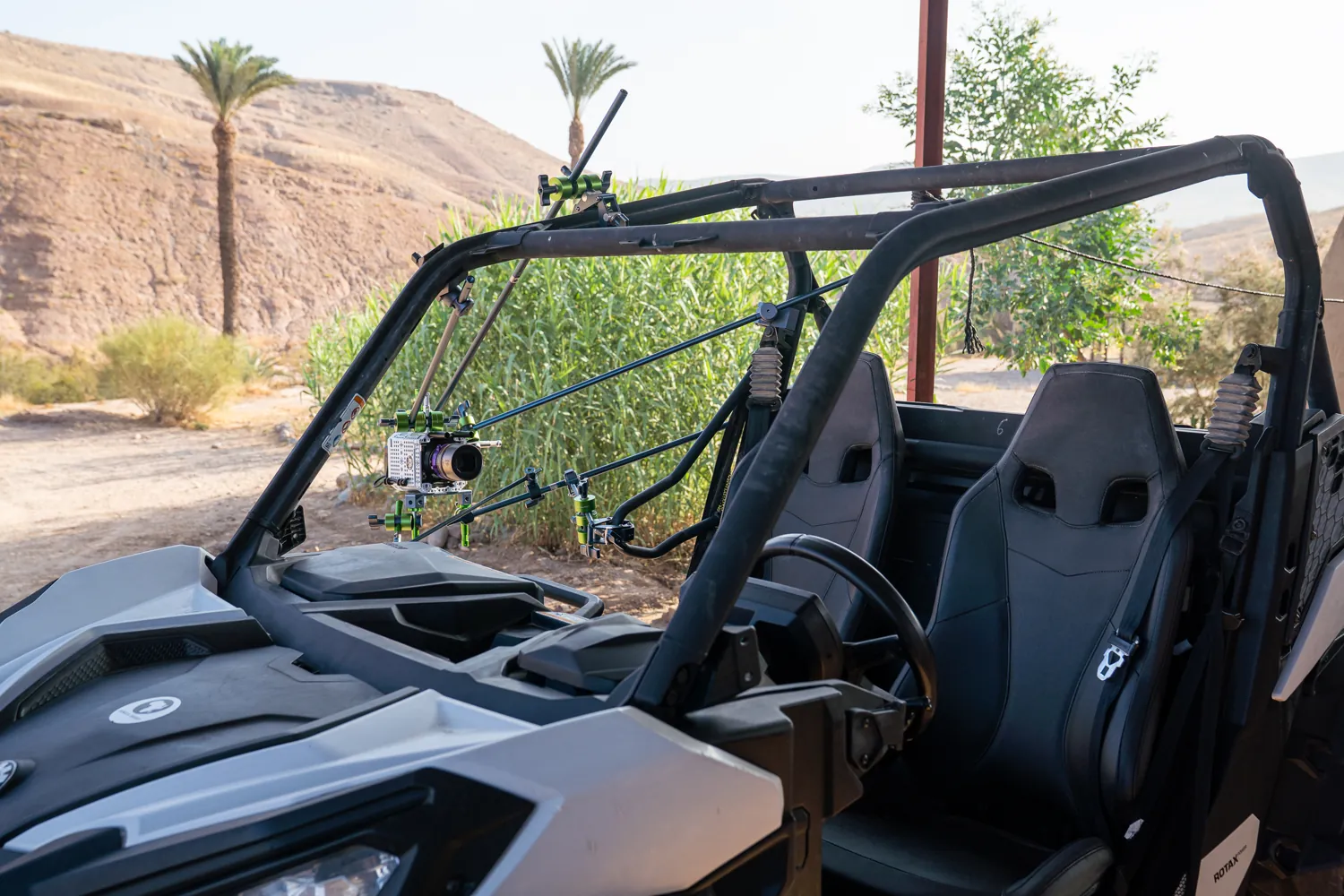
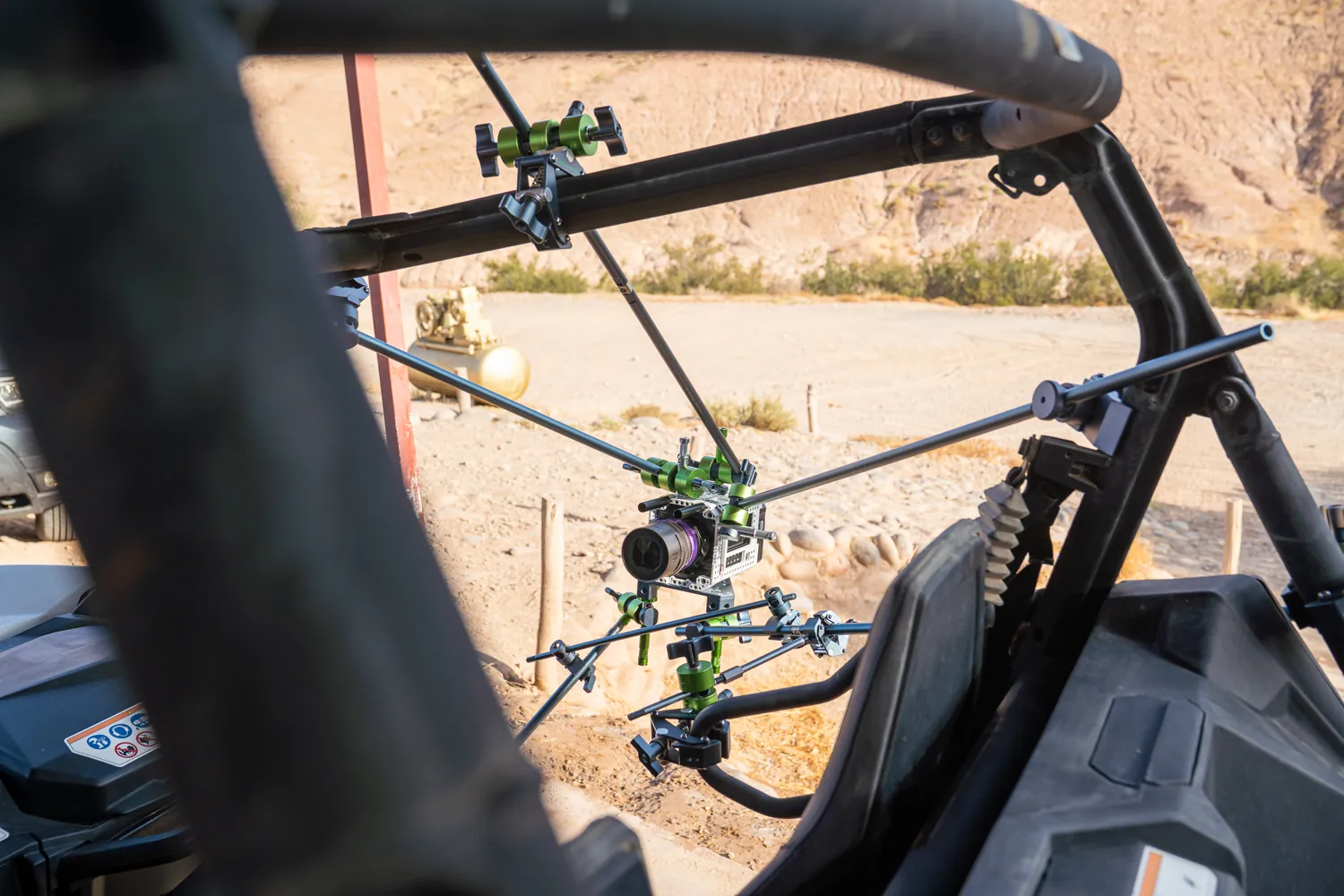
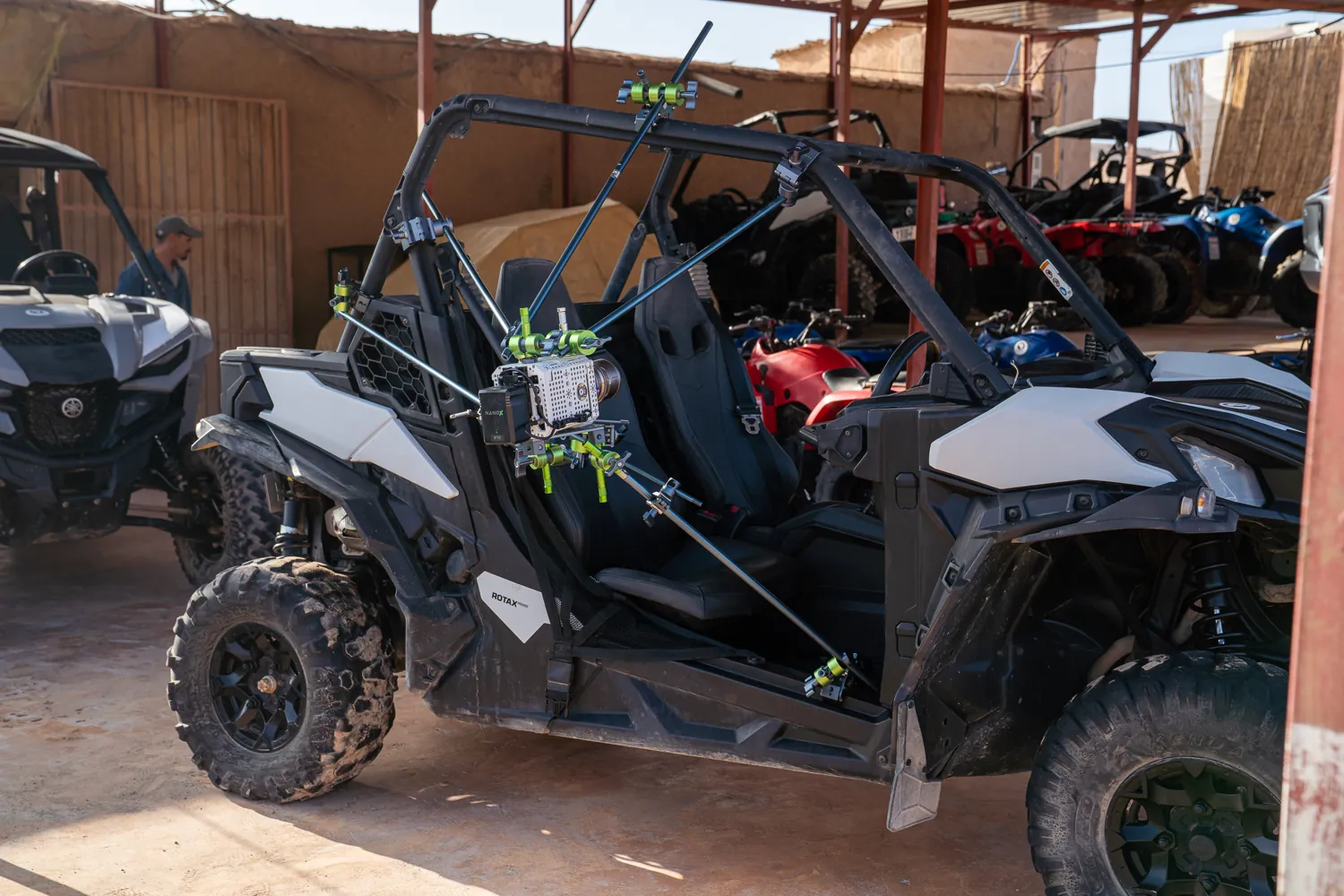
The rig was about as simple as it gets: the bare PYXIS body on baby pins screwed straight into the mounting points already on the camera.
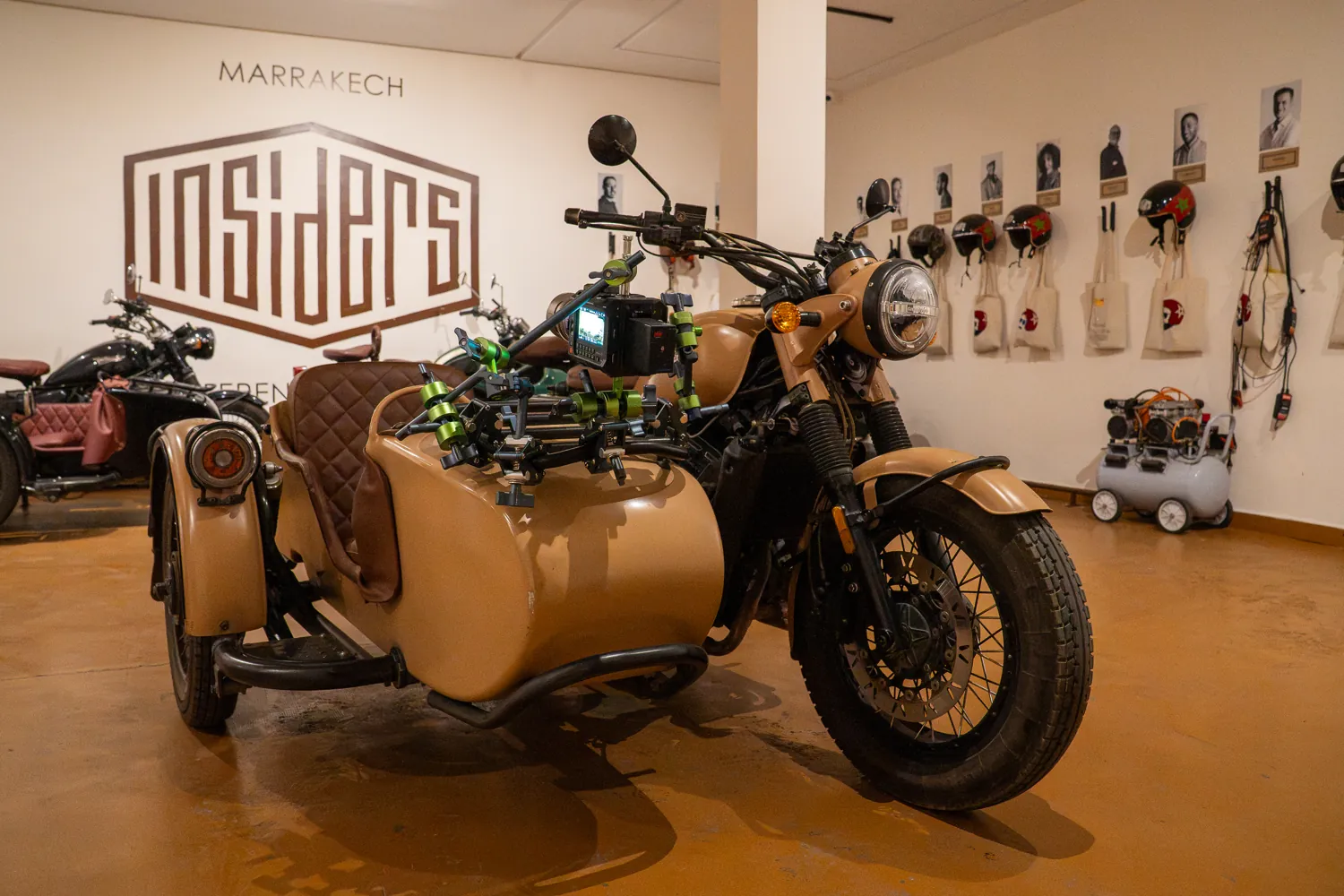
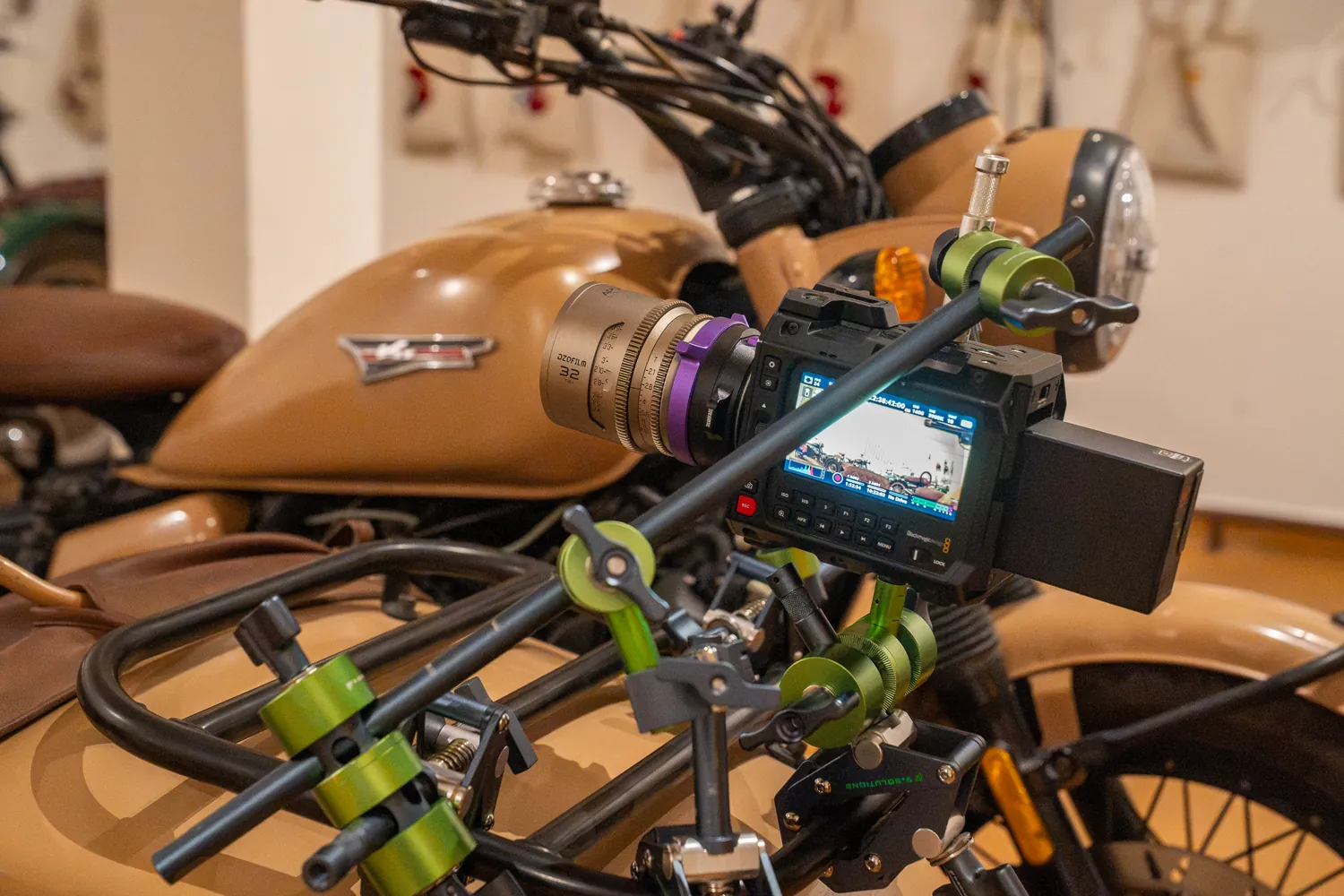
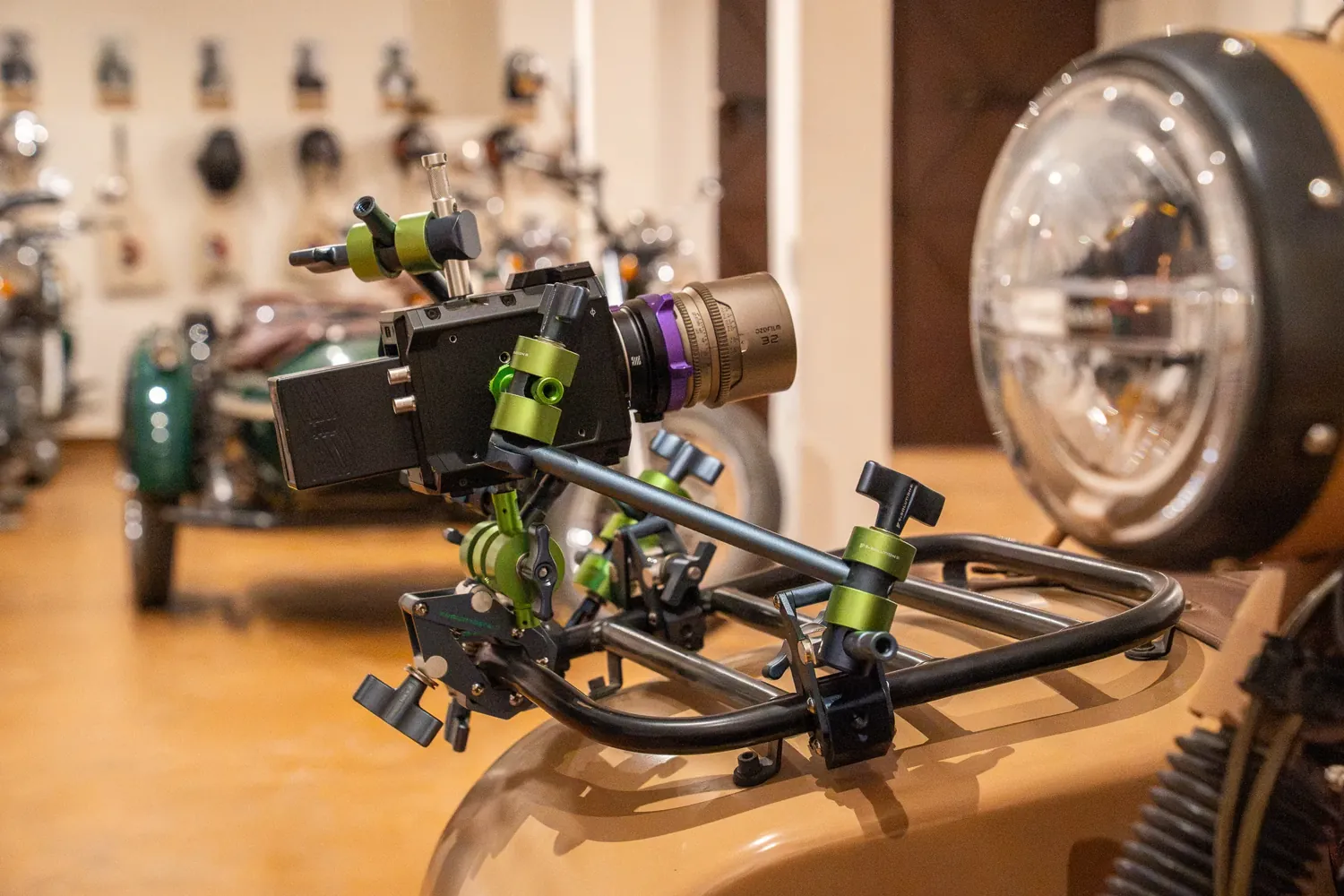
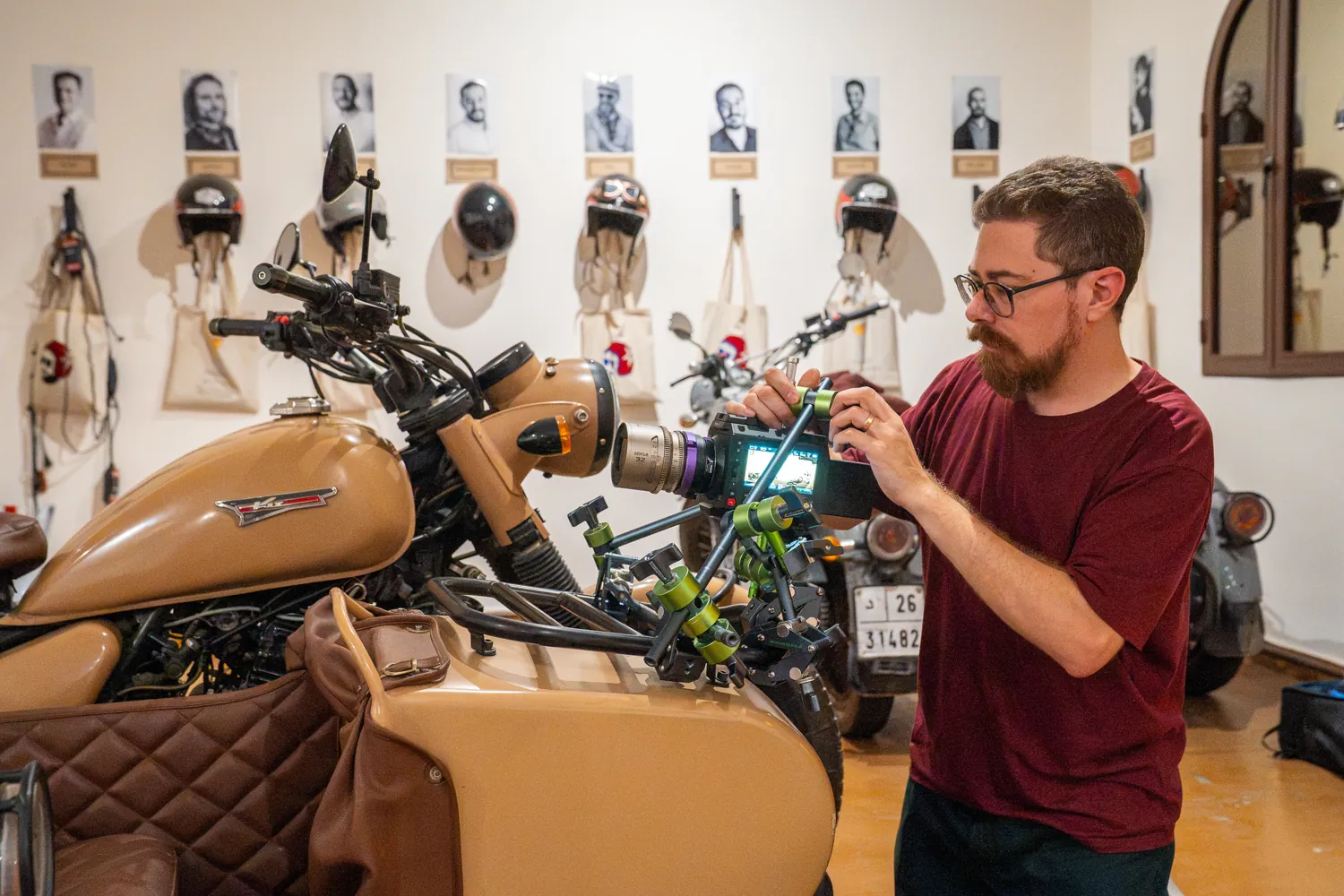
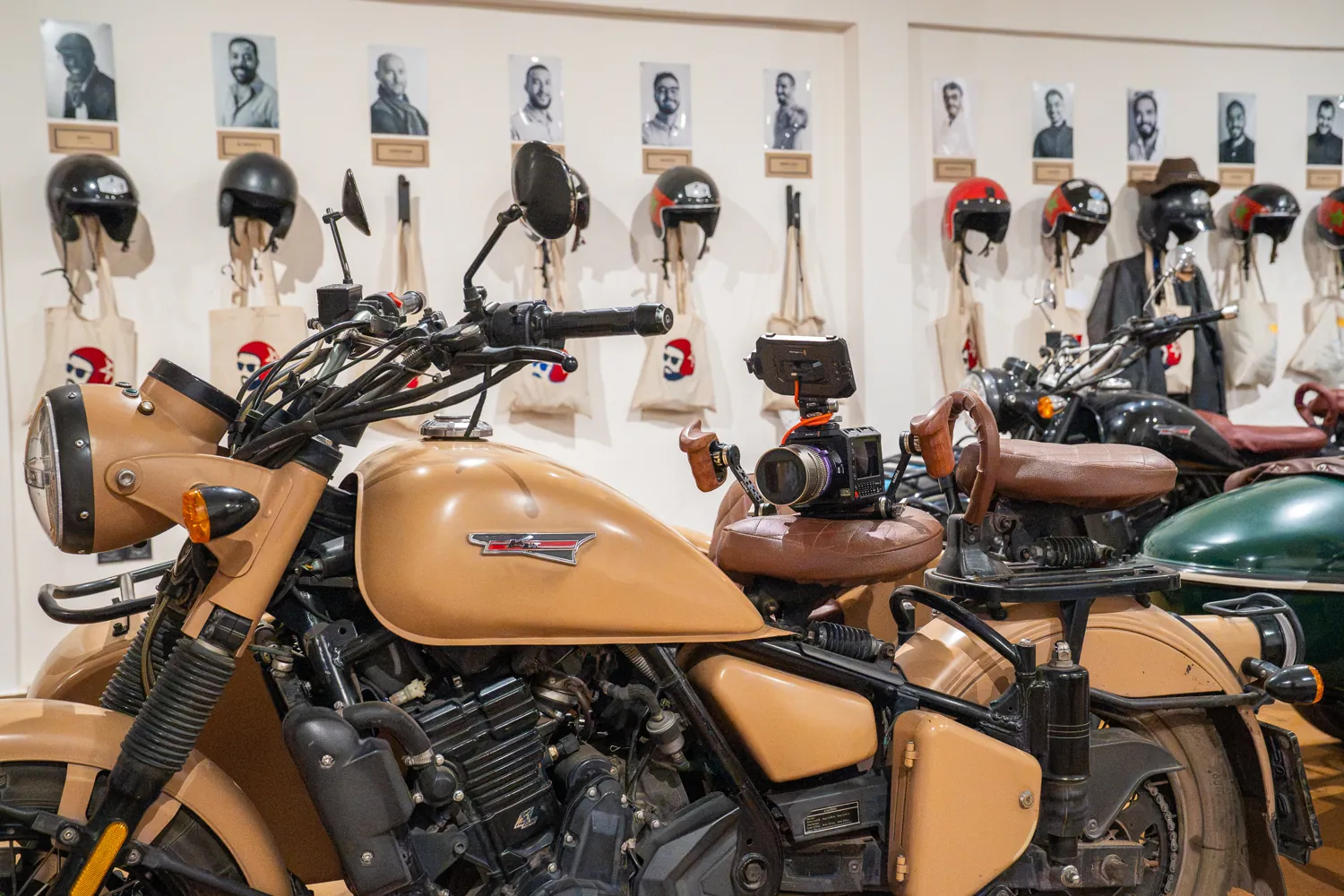
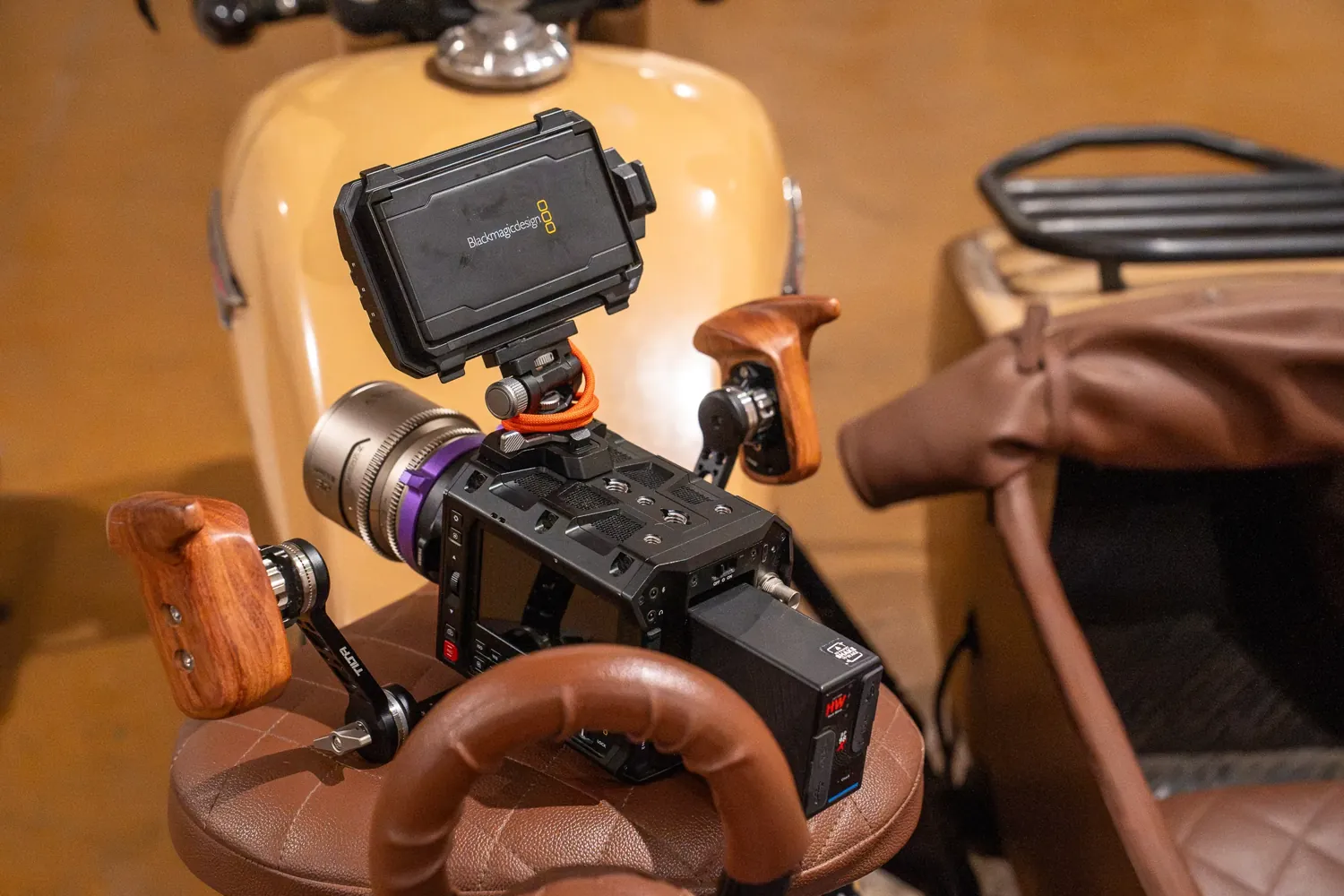
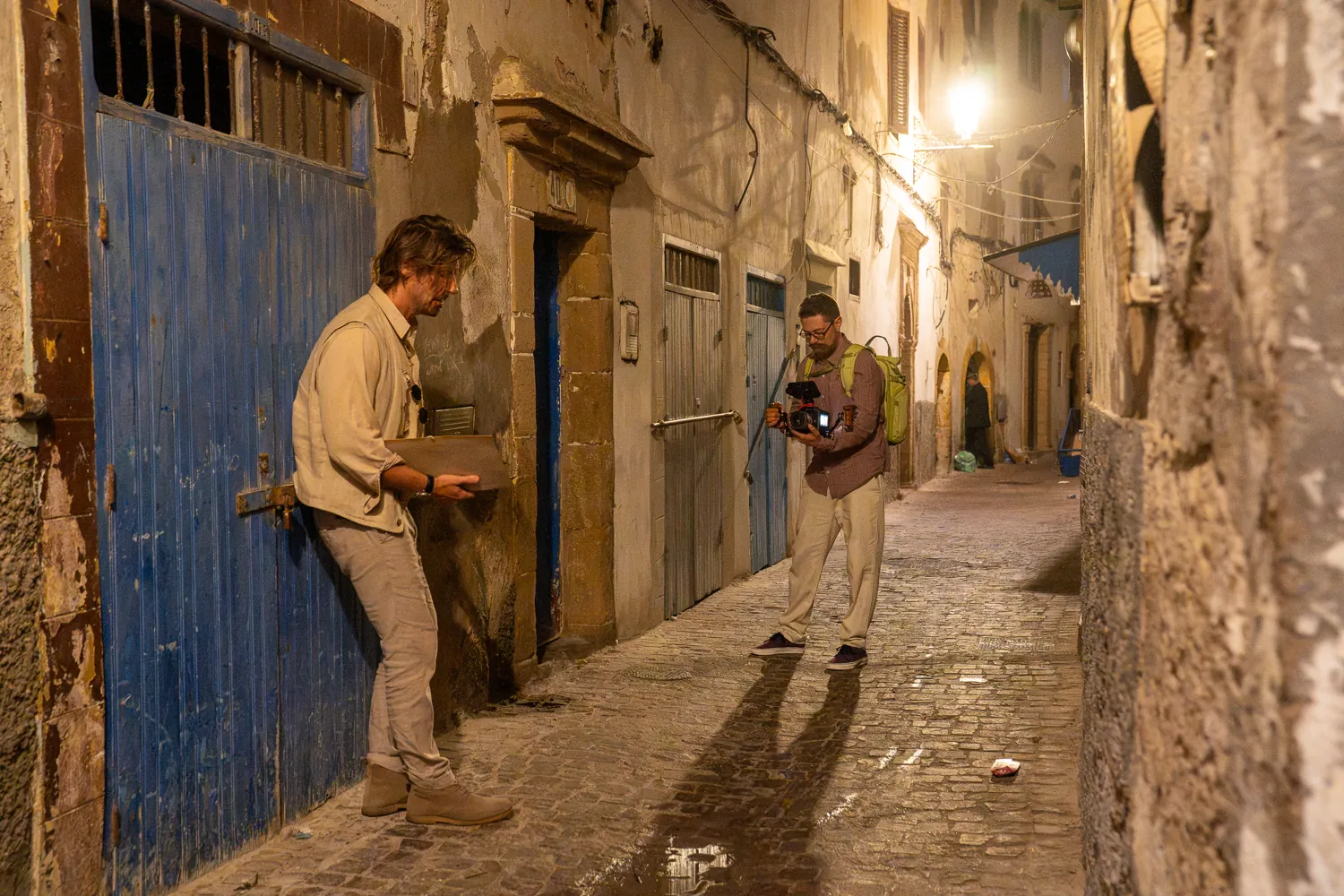
The camera was bolted to a motorbike sidecar and he could not monitor it once they were moving. He rode pillion at first, checked his subject under the street lights, and set the exposure for the person, not the city.
His priority was the subject's skin. If it went darker, fine. Blown-out skin would be much harder to save.
Both the 12K and the 4K material. He started in 12K by habit, looked at the first loop, and moved to 4K for the readout.
 NEUTRAL
He picked a few sections he liked, balanced the whole sequence around them, and let it play. It does not have to be clean all the time, because you can see him moving between different parts of the city.
In camera the shutter gets longer as the capture rate drops, so the extra motion blur sells the speed. For vehicles he will go as low as 19 fps. With people in frame he stays nearer 21, because anything faster looks unnaturally quick.
Over the years I have always bumped up against limitations in an image I am looking at. Dynamic range might be one example. With the PYXIS 12K, I am not really noticing that as I am shooting.Dale Campbell
Material from the project, mostly Blackmagic RAW at Q3.
Camera builds, from stripped to fully caged.
Between camera and subject for the sun shot.
The sun window at sunset, at most.
The lowest capture rate he used for undercranked vehicles.
Reached in 16:9 for the sandboarding sequence.
Total lens weight he travelled with, including the 500mm.
With the PYXIS 12K by the end of the Morocco trip.
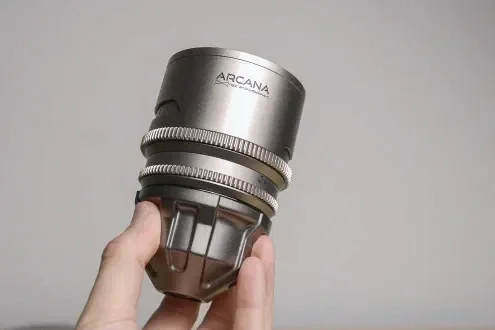
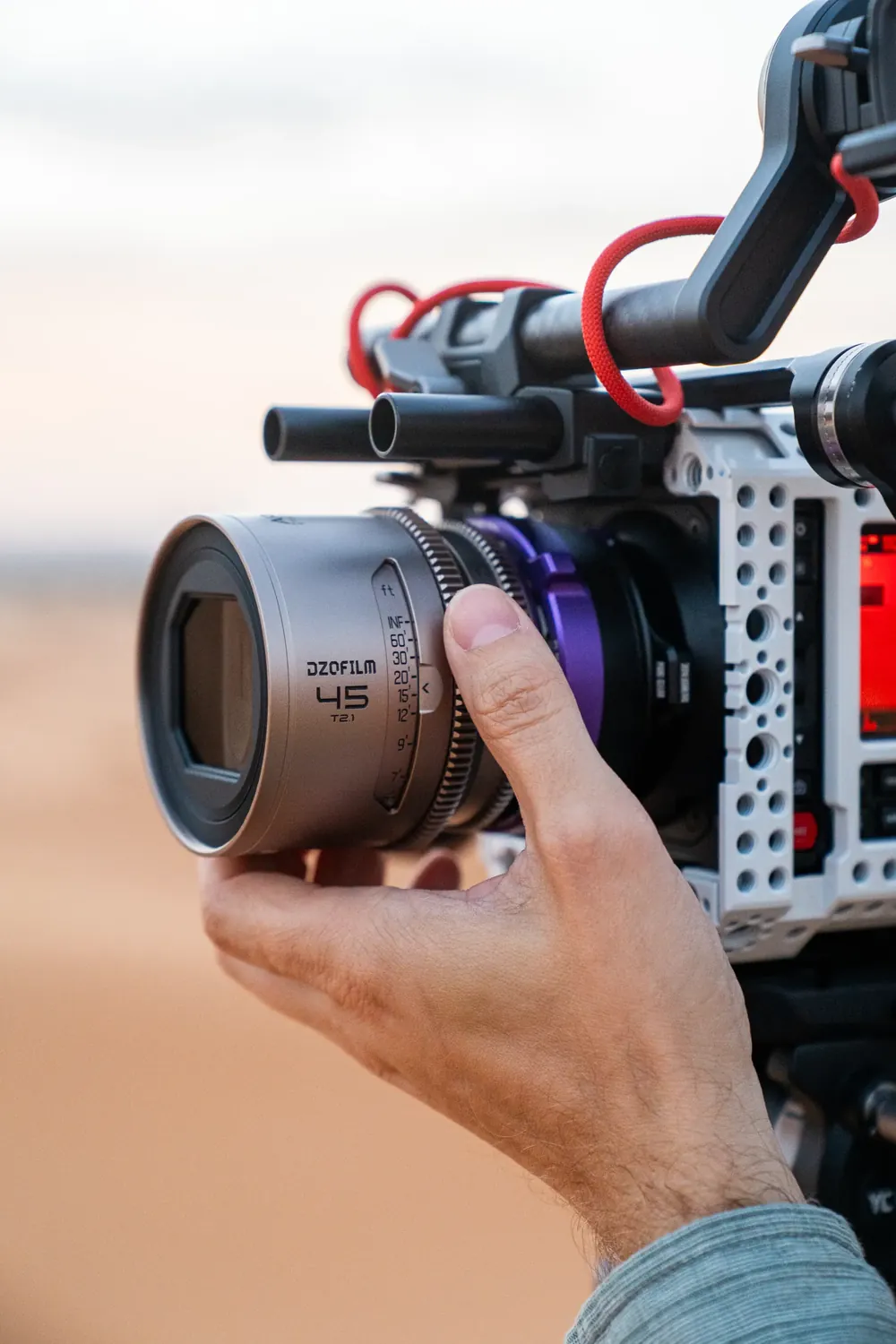
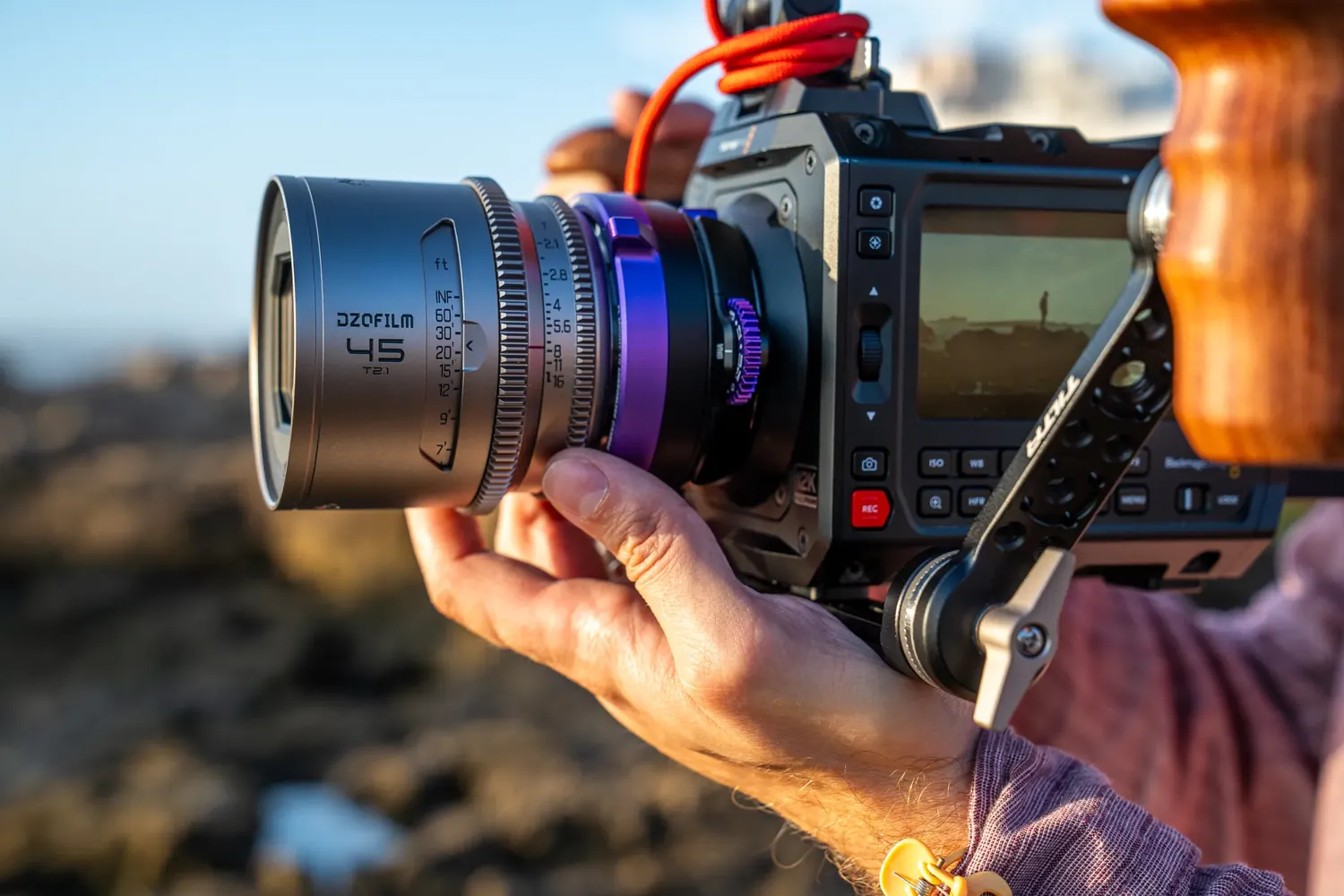
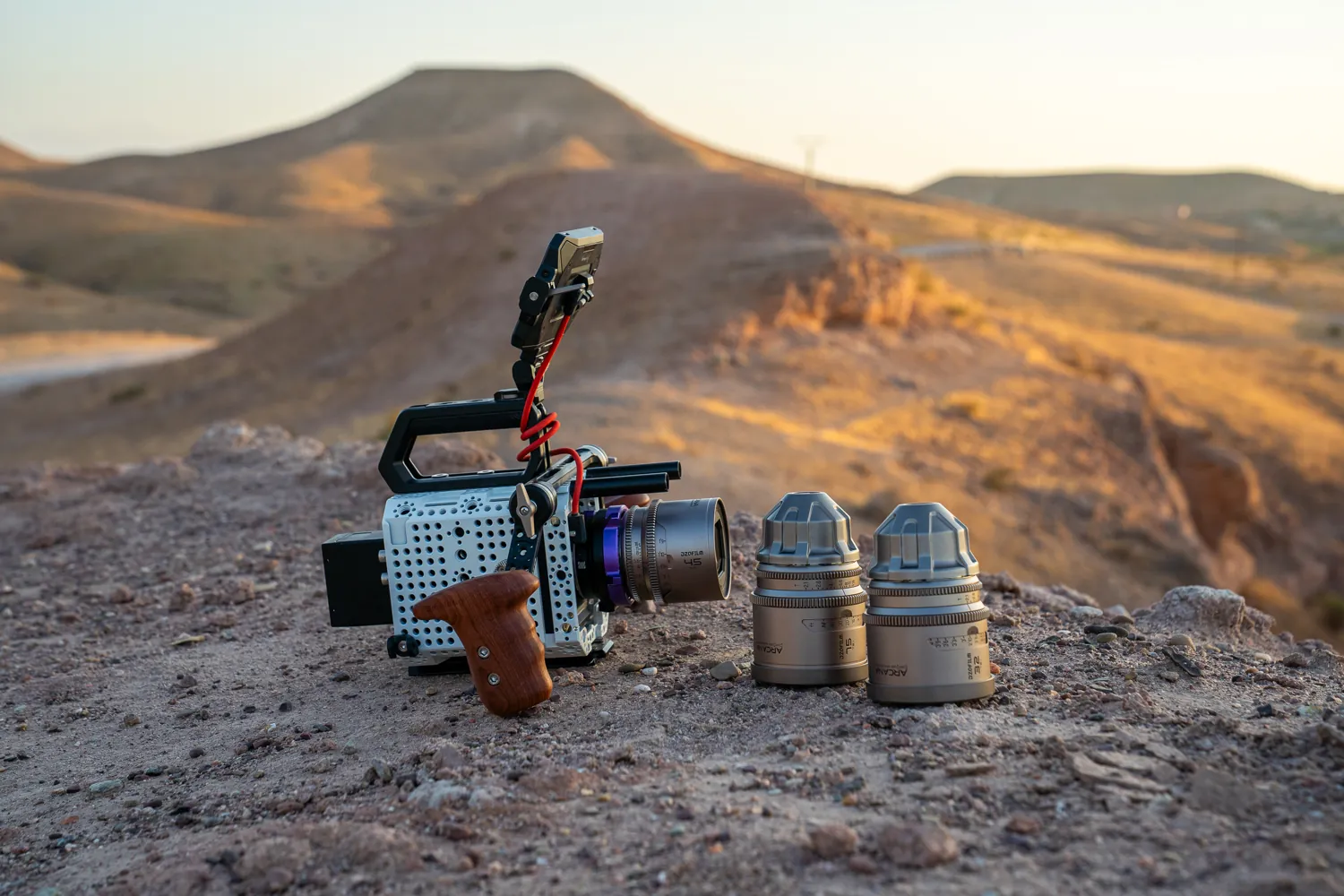
Because the PYXIS 12K is a 3:2 sensor, Dale found it works really well for anamorphic. He chose the DZOFILM Arcana, a 1.5x squeeze with an oval aperture that gives the bokeh the character you might associate with 2x.
They were PL mount, so a PL to L adapter let him put ND filters behind the lens.
Both the PYXIS 12K and DZOFILM lenses are available through MediaCast.
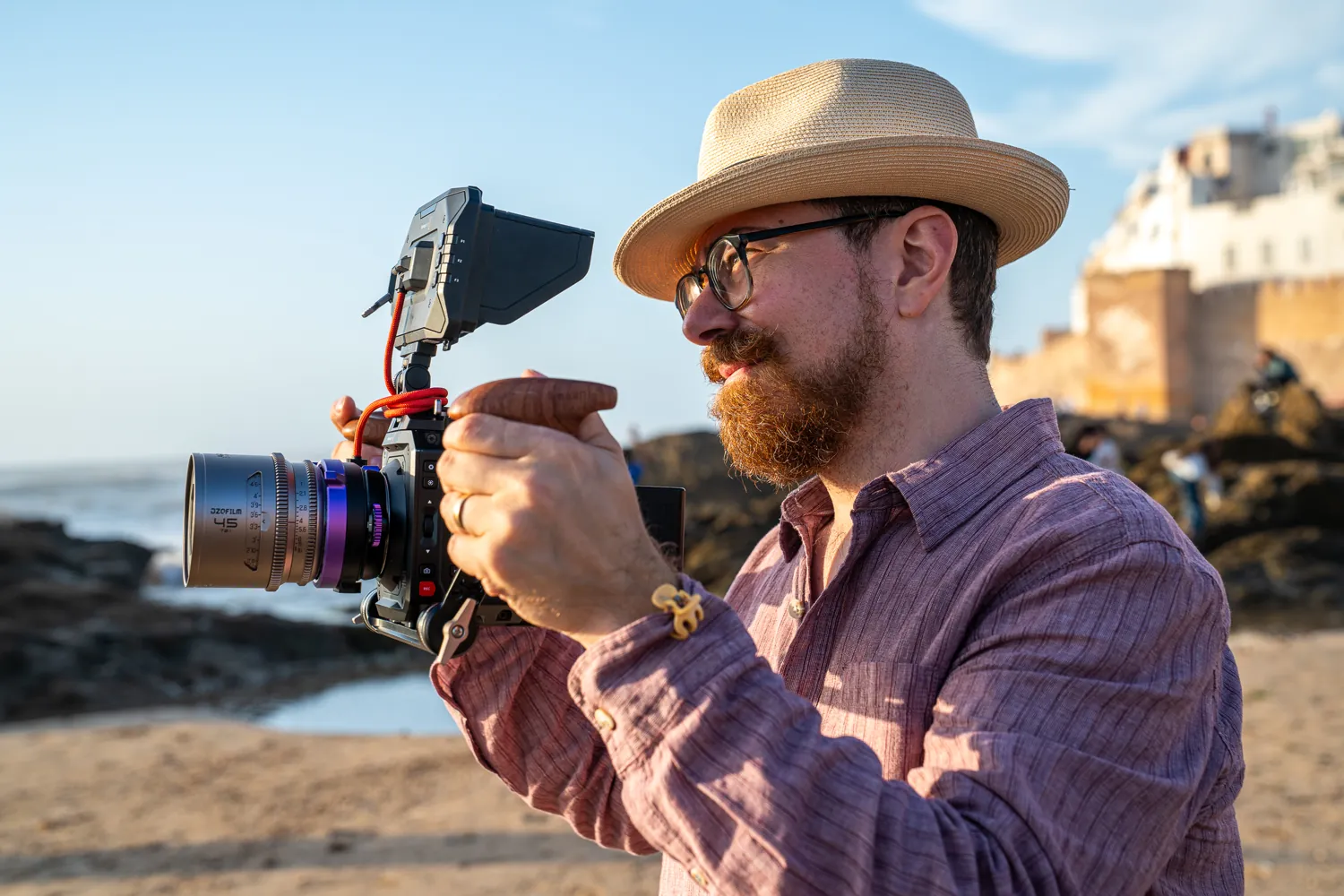 WebinarPresented live by Dale Campbell
Dale Campbell presents live on Zoom, walking through the shoot: the six-minute sun shot, how the recording modes were chosen, the six camera builds and the Marrakech night grade, with time for your questions.
Register and we will send the joining details.
See the PYXIS 12K at MCX in Dubai, and talk it through with the people who will support it afterwards.
Tell us a little and we will come back within one working day.